
Raising kids is a full-time job. Raising a dog is too. Trying to do both at the same time? That’s a whole new level of multitasking. When dogs and children live under the same roof, the benefits are enormous: companionship, responsibility, and emotional development. But so are the challenges.
As a professional dog trainer, I’ve seen it all: toddlers tugging tails, dogs guarding toys, and the all-too-common chaos when boundaries are unclear. The good news is, with the right training approach, your household can enjoy the rewards of having a well-mannered dog who knows how to behave around children, and vice versa.
Let’s break down exactly how to make that happen.
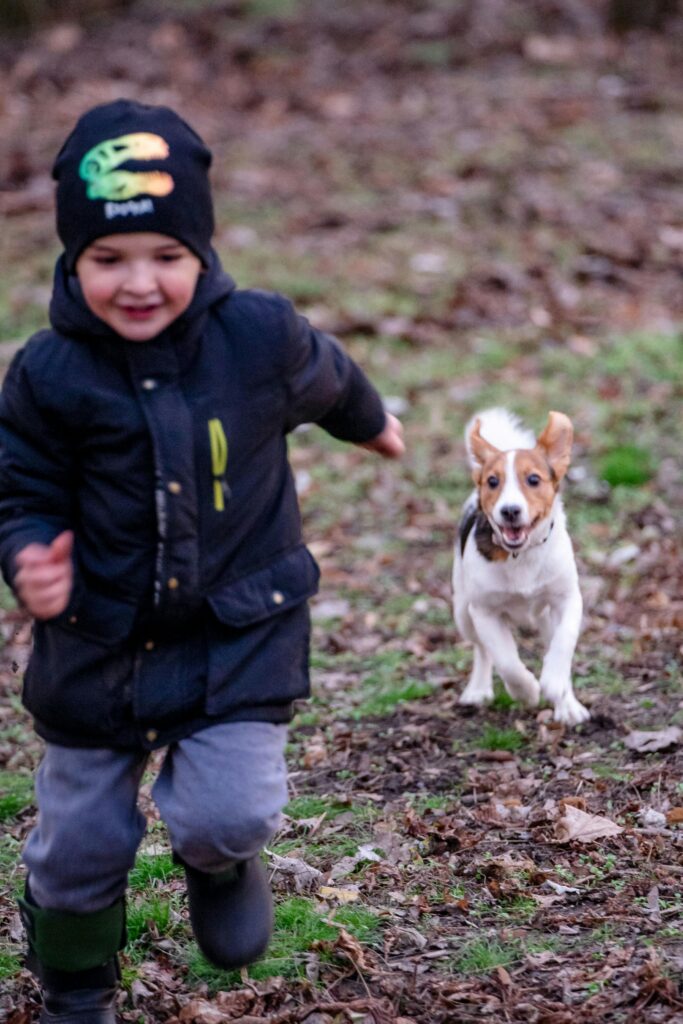
Why Kids and Dogs Need Rules, Not Just Love
Love is essential, but structure keeps everyone safe. Kids don’t automatically know how to interact with dogs, and dogs don’t instinctively understand what children are. Training teaches both parties how to live together respectfully.
Dogs view children differently than adults. Their unpredictable movements and high energy can confuse or even alarm a dog. This is why training is not optional in multi-kid households. It’s critical.
1. Teach Your Kids How to “Read” the Dog
Children are often too young to understand subtle canine signals, which is why teaching body language is vital. A yawning dog may be stressed, not tired. A stiff tail isn’t always a wag of joy.
Take time to observe and explain behaviors together. To go deeper, check out our guide on understanding your dog’s body language on walks, which is equally useful in home settings.
2. Start With Basic Obedience for Everyone
Before you can expect your dog to coexist peacefully with your children, they need to understand core commands like:
- Sit
- Down
- Leave it
- Place
- Recall (Come)
Our Basic Obedience Training Program lays the foundation that every family dog needs. This isn’t just about convenience. It’s about safety. A reliable “place” command can prevent your dog from jumping on a child or intercepting food at mealtime.
We recommend involving older children in the training process. They’ll gain confidence, learn leadership skills, and deepen their bond with the dog.
3. Set Up Structured Interactions
Free-for-all playtime between dogs and kids can lead to roughhousing and miscommunication. Set clear guidelines for interaction:
- No hugging or climbing on the dog
- No waking a sleeping dog
- Toys stay separate (no sharing chew toys or stuffed animals)
- Calm voices and movements around the dog
Make time for supervised, calm, and positive play like fetch or hide-and-seek with treats.
4. Use Visual Boundaries to Reduce Chaos
Visual cues help both dogs and kids understand spatial rules. You can use:
- Baby gates for safe separation
- A dedicated crate or “place” mat
- Playpens for babies and toddlers
These barriers don’t isolate. They protect. They give everyone a break when needed and prevent overstimulation.
5. Reward Calm Behavior (Don’t Just Punish Chaos)
It’s easy to scold when things go wrong. But in dog training, what you reinforce matters more. Catch your dog being good:
- Lying down quietly
- Sitting to greet your child
- Walking away from dropped food without being told
Use treats, praise, or affection to mark those moments. Positive reinforcement builds habits faster than any correction.
6. Be Consistent With Routines
Dogs and children thrive on predictable schedules. Try to feed, walk, and train your dog at roughly the same times each day. Include the kids in those routines whenever possible. This builds trust and reduces anxiety for everyone.
7. Be Proactive About Supervision
According to the CDC, most dog bites involving children happen during unsupervised interactions. Prevention starts with presence.
Don’t assume your dog would never bite. All dogs have limits. Until your child is old enough to consistently follow dog-safe behavior, they need you there.
8. Don’t Wait for Problems to Start Training
Too many families seek help after something goes wrong. Instead, build obedience and healthy habits early. One of our most popular summer posts, How to Help Your Dog Settle at Outdoor Cafes and Events, shares techniques you can apply in busy home environments too.
If you’re looking for a proven training approach that adapts to real-world family life, we can help.
9. Use Reliable Resources for Child Education
Helping your children understand dog behavior is just as important as training the dog. The American Veterinary Medical Association has an excellent guide on dog bite prevention for kids, including safety tips and child-friendly learning tools.
Make it part of their early education.
10. When in Doubt, Hire a Pro
Sometimes, even the best intentions fall short. If your dog is showing signs of stress, guarding behavior, or has already had a scary incident with a child, professional help is essential.
We work with families every day to restore peace, confidence, and control. Our trainers customize plans based on your home dynamics, your dog’s temperament, and your children’s ages.
Final Thoughts: It’s About the Pack
Your dog and your children are part of the same family, or “pack.” When both are guided with clarity, structure, and love, you create a home where trust and calm energy reign.
A well-trained dog isn’t just easier to live with. They’re safer around your kids. And a dog who knows their place in the family structure will repay you with loyalty, love, and peace of mind.
Ready to build harmony between your kids and your dog? Contact us today and let’s get started with a personalized plan.