Mastering Loose Leash Walking Before Fall Adventures Begin
Crisp air, changing leaves, and long weekend hikes are right around the corner. But if your dog turns every walk into a tug-of-war, those beautiful fall outings can quickly become frustrating.
Loose leash walking isn’t just about comfort. It’s a core obedience skill that builds focus, trust, and freedom. Teaching your dog to walk politely by your side opens the door to stress-free adventures this fall, from farmers markets to trail walks and dog-friendly festivals.
If you’ve struggled with pulling, lunging, or zigzagging on walks, now is the perfect time to reset your leash habits. Here’s how to get your dog walk-ready before autumn hits.
Why Loose Leash Walking Matters
A well-behaved dog on a leash is safer, calmer, and more enjoyable to be around. Without leash manners, your dog is more likely to:
- Dart into traffic
- Jump on strangers
- Trigger other reactive dogs
- Injure you or themselves with sudden jerks
Loose leash walking teaches your dog that you, not the environment, set the pace. It’s about mental control, not just physical restraint.
1. Know the Difference: Loose Leash vs. Heel
These two are often confused.
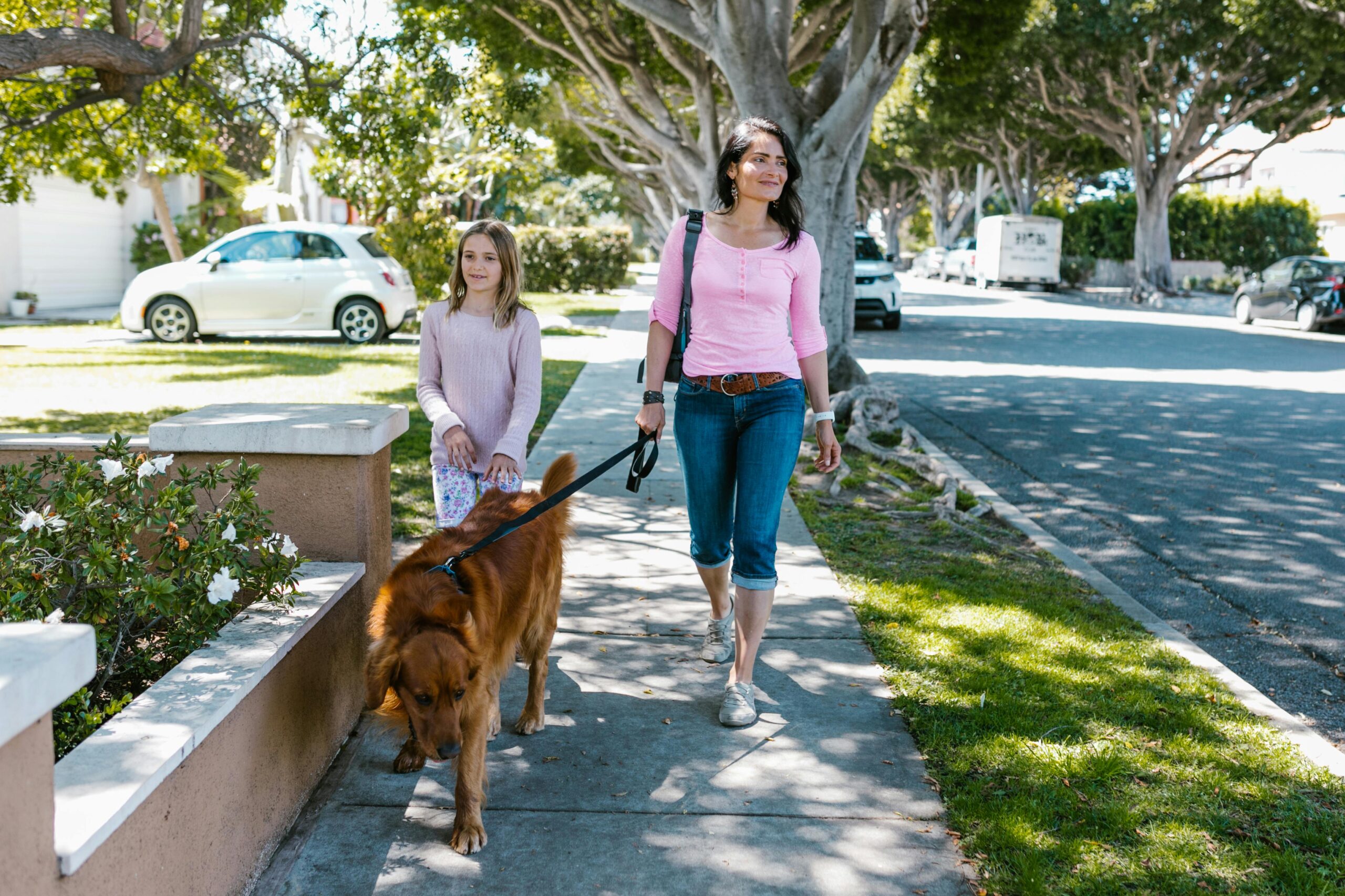
- Loose leash walking means your dog can walk slightly ahead or to the side, but without pulling.
- Heel means your dog walks directly next to your leg with total focus. It is often used in more structured settings.
Loose leash walking is ideal for everyday strolls. It gives your dog more freedom while still respecting your leadership.
We break this distinction down in more detail in our blog on understanding loose leash walking vs. heel training, including which one to use based on your goals.
2. Start in a Low-Distraction Environment
Before hitting the trails or busy streets, start your training in a quiet, low-stimulation area like your backyard or driveway.
- Use a 4- to 6-foot leash (not retractable)
- Keep your leash relaxed, not tight
- Walk in straight lines, then add turns to keep your dog engaged
- Reward your dog with praise or treats for staying beside you without pulling
Once your dog is consistent in calm areas, introduce mild distractions, such as passing cars, people, or other dogs at a distance.
3. Use Marker Words and Rewards
Timing is everything. Use a consistent marker word like “Yes” or “Good” the moment your dog walks nicely on a loose leash. Follow it with a small reward to reinforce the behavior.
Avoid using food as a constant lure in front of their nose. You want them to choose to stay near you because they’ve learned it pays off, not because they’re being bribed.
4. Don’t Let Pulling Pay Off
If your dog pulls forward and you follow, you’ve just rewarded the pulling. Instead:
- Stop walking as soon as the leash tightens
- Wait calmly until your dog releases tension or returns to your side
- Then resume walking
This teaches your dog that pulling gets them nowhere, but walking politely moves the adventure forward.
5. Redirect and Reset
Dogs will make mistakes. When they do, stay calm and redirect.
- Use a verbal cue or a leash pop to regain attention
- Make a 180-degree turn and walk the opposite direction
- Reward when your dog re-engages and follows
The goal is not to punish the pull but to interrupt it and reinforce the correct behavior immediately afterward.
6. Use Proper Tools and Training Techniques
Training collars like prongs or martingales, when used correctly, can provide the feedback your dog needs to understand leash pressure. These tools are part of our Basic Obedience Program because they help dogs learn clear boundaries and how to respond appropriately.
Paired with positive reinforcement and consistency, they can dramatically reduce pulling in a short amount of time.
7. Build Focus Around Distractions
The real challenge isn’t getting your dog to walk nicely at home. It’s keeping that behavior around squirrels, other dogs, or food smells.
That’s where proofing comes in:
- Practice in front of grocery store entrances
- Walk during busier times of day
- Use obedience games that reward focus despite distractions
Looking for more ways to improve your leash work? The AKC’s guide to harnesses vs. collars helps break down which leash tools work best for different dog types and training goals.
8. Keep Sessions Short and Frequent
Ten minutes of focused leash work is more valuable than a frustrating 45-minute walk. End each session on a high note and keep your expectations realistic. With daily practice, most dogs show noticeable improvement within a couple of weeks.
9. Celebrate the Progress
Loose leash walking doesn’t become perfect overnight. But if you stay consistent, you’ll be ready for all your favorite fall activities, including:
- Hiking trails with your dog calmly at your side
- Walking through pumpkin patches or festivals without drama
- Enjoying coffee on dog-friendly patios
- Traveling peacefully with your pup in new environments
Final Thoughts: Autumn Is Better With Obedience
Fall is one of the best seasons to get outdoors with your dog. But if every walk feels like a battle, it takes the joy out of it. With the right techniques, equipment, and mindset, you can turn your leash struggles into smooth, enjoyable outings.
If you’re ready to walk into fall with confidence, we’re here to help you make it happen.
Want calm, confident walks this fall? Contact us today and let’s build a plan for your dog’s leash success.