Winter Training: Cold Months Are Perfect for Maximum Progress
Many owners assume that winter is the “off-season” for dog training. Cold weather, short days, and holiday schedules make it tempting to wait until spring. But in truth, winter is one of the best times to work on your dog’s obedience.
Training during colder months helps your dog stay focused, strengthens routines indoors, and sets the foundation for an easier spring. With consistency, your dog can make remarkable progress, no matter the temperature outside.
1. Fewer Distractions, Better Focus this Winter
During winter, there are fewer outdoor distractions. No squirrels running across the yard, fewer dogs at the park, and less foot traffic overall. This makes it an ideal time to build stronger focus.
Work on recall, duration commands, and leash manners in quiet environments before distractions return in spring. Our Basic Obedience Training Program helps create structure and discipline so your dog listens in any season.
2. Winter is the Perfect Time for Indoor Skills
Winter weather pushes everyone indoors, and that’s not a bad thing. Use the opportunity to focus on indoor obedience and household manners.
Great indoor exercises include:
- Place command for calmness during family time
- Doorway manners to prevent dashing outside
- “Leave it” training for dropped food or holiday items
- Crate training for confidence and structure
For more on how to practice calm behavior in busy settings, read our post on how to help your dog settle at outdoor cafes and events. The same focus skills apply indoors during winter gatherings.
3. Short, Productive Winter Training Sessions
Cold weather means shorter outdoor sessions, but that can actually boost learning. Dogs benefit from focused, high-quality practice over long, distracted outings.
Five to ten minutes of consistent training, two or three times a day, reinforces commands effectively. End each session on a positive note, and always reward calm, attentive behavior.
4. Keep the Mind Active When Outdoor Time Is Limited
If long walks or play sessions aren’t possible, switch to mental enrichment. Winter is a great time to introduce puzzle toys, scent games, and obedience drills that challenge your dog’s brain.
A mentally stimulated dog is less likely to develop problem behaviors like chewing, barking, or pacing.
5. Build Confidence in New Environments
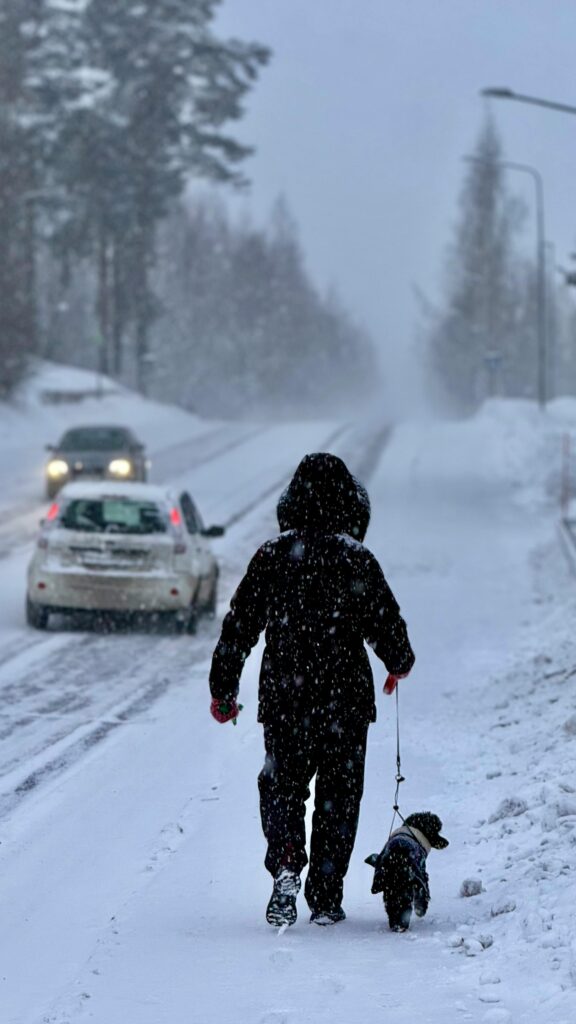
Colder months bring new sights and sounds, coats, boots, heaters, and even snowplows. Use these as desensitization opportunities. Let your dog explore safely while you reinforce calmness and curiosity.
If your dog is nervous or reactive, start slow. The goal is exposure without overwhelming them. With consistency, winter training builds resilience and confidence.
Checklist: How to Succeed With Winter Dog Training
- Keep sessions short and consistent.
- Focus on calmness and structure indoors.
- Use puzzle toys for mental enrichment.
- Reinforce recall, sit, and place daily.
- Maintain exercise through short walks or play.
- Use indoor time to strengthen obedience under distractions.
- Practice calm greetings when guests visit.
These habits ensure steady progress even when it’s cold outside.
FAQ: Winter Dog Training
Q: My dog doesn’t like the cold. How can I train outside?
A: Keep sessions short and reward generously. Use indoor space for most training and short outdoor breaks to proof commands.
Q: Can my dog still get enough exercise in winter?
A: Yes. Mix short walks with indoor games like fetch, tug, or hide-and-seek to burn energy safely.
Q: Is it okay to train indoors only?
A: Absolutely. Focus on obedience, duration, and calmness. Once spring comes, transition those skills outdoors.
Q: Do cold temperatures affect motivation?
A: For some dogs, yes. Use higher-value treats and more praise to keep them engaged.
Q: What’s the most important command to reinforce in winter?
A: The place command. It promotes calmness, patience, and self-control when outdoor activity is limited.
Reliable Resource
For expert tips on keeping your dog healthy and active through the cold season, visit the AKC’s winter training and care guide. It highlights the importance of consistent structure and mental engagement during the colder months.
Final Thoughts: Don’t Wait for Spring to Train
Winter isn’t a setback, it’s a secret advantage. Fewer distractions, calmer routines, and more indoor time make it the perfect season to focus on obedience and consistency.
By spring, your dog will be more focused, better behaved, and ready to enjoy outdoor adventures with confidence.
Ready to make the most of winter training? Contact us today and we’ll help turn your cold-weather season into a time of real progress.