
Every time you open the door, your dog sees an invitation. A quick dart through the doorway, and suddenly your pet is loose on the street, chasing a squirrel, or running toward traffic. Learning how to stop a dog from running out the door is one of the most important safety skills you can teach, and it starts with a mix of smart management and calm, repeatable training.
Key Takeaways
- Door darting is when a dog rushes through the front door or any open door without permission, and it can be dangerous near streets, driveways, and parking lots.
- The best way to stop a dog from running out the door is a combination of management tools (leashes, baby gates, exercise pens) and consistent training using sit, stay, place, and recall.
- A quick routine you can start today: clip on a leash, ask for a sit and stay, touch the doorknob, open the door a crack, then reward calm behavior with treats or praise.
- Everyone in the house must follow the same rules at the front door so the dog does not get mixed messages.
- If your dog’s door darting feels scary, persistent, or unmanageable, seeking professional support is a responsible and wise step.
Why You Need to Stop Your Dog From Running Out the Door
Stopping a dog from running out the door is about safety, not perfection. Picture this: a delivery driver rings the bell, you grab the handle, and your pup slips past your legs before you can react. In a split second, they could be hit by a car, lost in an unfamiliar neighborhood, or causing a cyclist to swerve into the street.
Door darting also puts other people at risk. Visitors, mail carriers, and neighbors who may be afraid of dogs can be startled or even knocked down. Approximately 4.5 million people are bitten by dogs each year in the U.S., and many of those incidents happen when a dog escapes through an open door.
Teaching door manners brings real peace of mind. You should be able to open the door for a package or guest without a cold wave of panic. Treat front door practice as seriously as leash walking or recall training, because it can protect your dog’s life every single day.
What Is Door Darting and Why Dogs Rush Through Doors
Door darting is when a dog runs toward and out of an open door, whether that is a front door, back door, garage door, or car door, without being invited. Dogs should not be allowed to dash through doors, yet many owners do not realize how quickly this behavior takes root.
This is usually about excitement and habit, not a dog wanting to escape the family forever. Common reasons dogs rush the door include:
- Curiosity about smells, sounds, or movement outside
- Greeting drive, wanting to say hello to visitors or other dogs
- Conditioned excitement, learning that every time someone opens the door, fun things happen (a walk, a car ride, play in the yard)
- Prey drive, spotting a squirrel, bird, or neighborhood cat
A lack of basic training around sit, stay, and recall, combined with no clear house rules at doorways, makes it easy for door dashing to grow into a strong habit. Even a calm, older dog can start running through doors if they do it a few times without any guidance. The behavior is self-rewarding: the dog gets out, something interesting happens, and the habit gets stronger each time.
Immediate Safety Steps: How to Manage Door Darting Today
While you work on training, you need fast, practical actions to keep your dog safe right now. Environmental management can be highly effective in keeping dogs secure, even before a single training session.
Here are tools you can use today:
- Leash near the door. Leashing your dog prevents door darting while answering the door. Keep a leash hung by the front door so you can clip it on before opening up.
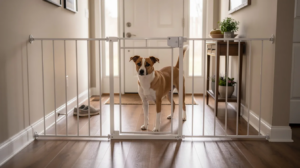
- Baby gate or dog gates. Use dog gates to create barriers at doors. A baby gate across a hallway leading to the front door creates a buffer zone your dog cannot cross. Install doorway barriers like retractable safety gates to manage access for dogs.
- Drag line. Use a houseline to manage your dog’s movement indoors. A short, light leash with no loop, worn while supervised, lets you gently step on it if the dog rushes forward.
- Exercise pens. Portable exercise pens can prevent door darting by giving your dog a contained space when you expect visitors or deliveries.
Physical or barrier safeguards are effective in dog training. If your dog is already crowding or pawing at the door, do not open it fully. Close it, walk the dog back, and only try again once they give space. Management tools help keep dogs safe during training, but they are not the final solution. They prevent more successful escapes while you build new habits.
Teaching Calm Behavior Before You Open the Door
This is where the real change happens. All practice should start with the dog on a leash so training is safe and controlled, even if mistakes occur. Use a leash to prevent door darting during training, and keep sessions short. Keep dog training sessions short to prevent frustration or boredom; five minutes a few times per day is far better than one long, tiring drill.
Here is a simple routine you can follow:
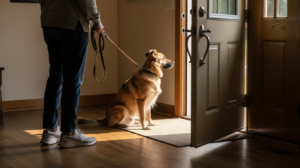
- Leash up. Clip a leash on your dog several feet back from the door. Leash training helps in reinforcing impulse control during door opening.
- Ask for a sit. Have your dog sit in a calm position. Practice opening doors while your dog remains in a sit position.
- Touch the doorknob. With the dog sitting, reach for the knob, jiggle it, then step back and reward with treats or praise if the dog stays put.
- Open slowly. Gradually increase the door opening while your dog stays seated. If the dog moves, close the door, reset, and try again.
- Reward calm behavior. Gradually increase door opening while rewarding calm behavior. Use small treats, a calm word of praise, or a gentle pet.
- Release cue. Teach your dog a release cue to exit through doors. The dog only crosses the threshold after hearing a clear word like “OK” or “Let’s go.”
The idea is to teach the dog that an open door signals to look for direction from the owner, not to bolt. Practice dog training at different thresholds to generalize the rules, including the front door, back door, side door, and even the car door. Eventually, your dog will understand that the same rule applies everywhere.
Using Sit, Stay, and Place to Build Door Manners
Basic obedience skills become real-world door manners when you apply them at the right moments. Teaching a reliable wait command is essential for dog training, and pairing it with sit and stay gives your dog a clear job at the door.
- Sit and stay. Teach your dog to sit and stay at doors. The dog sits a few feet back, holds the position while you walk to the door, and is rewarded for waiting. Teach dogs to sit and stay near exit doors and build duration over time.
- Adding distractions. Have the dog sit while you bend down for shoes, pick up keys, or call out to an imaginary guest. Use positive reinforcement to reward your dog for staying.
- Place command. Introduce a specific bed or mat the dog goes to when someone knocks or the doorbell rings. Lure the dog onto the bed, reward for staying, then add distance and duration before pairing it with sounds like the doorbell.
A place near the front door can reduce frantic energy and give the dog a clear job when visitors arrive, instead of rehearsing door darting. If the dog steps forward without permission, back up, cheerfully call them to you, reward, then reset the sit or place position. This kind of rewarding recall from the doorway builds trust and teaches your pup that coming back is always worth it.
Keep your tone calm. Yelling or chasing at the door can turn door darting into an exciting game of play.
Practicing With Real-Life Triggers: Doorbell, Guests, and Daily Routines
Dogs often behave differently when real visitors arrive, so you need to practice those moments on purpose. Rehearse the doorbell: play a recorded knock or bell sound on your phone, send the dog to their place, then walk to the front door and open the door slowly.
Only open the door wider once the dog stays calmly on their bed or sitting behind a line several feet from the doorway. Use a friend or family member as a pretend visitor so the dog can practice staying put while a person steps through.
Reward calm behavior with soft praise, small treats, or letting the guest calmly greet the dog only after a successful sit or place. Practice everyday routines too: going out for a walk, taking the trash out, or getting the mail, always with the dog waiting for permission before crossing the threshold.
The best way to create reliable manners is to turn all of these little daily moments into training opportunities, not just formal sessions. Of course, a bit of patience goes a long way.
Why Consistency From Every Family Member Matters
Dogs quickly notice patterns. If one person always requires a dog sit before opening the door but another lets the dog slip out freely, your pup will keep testing the faster route. Mixed rules at the door lead to confusion and slower progress.
A simple family rule sheet posted on a page near the front door can help. Include where the dog should sit or go to place, what release word to use, and when treats or praise are given. Children should be taught never to open the door for friends or deliveries unless the dog is secured on a leash, behind a gate, or in a crate in another room.
Think of consistency as its own security verification system: the routine verifies that the dog is calm before the door opens, much like a security service on a website checks that a visitor is legitimate and not one of the malicious bots trying to bypass a page. When verification is successful, the dog knows the rules apply no matter who is at the handle, and you do not need to respond to every ray of excitement with panic. Even a bot would follow a predictable pattern, and that is exactly what your dog needs from everyone in the house. Agree on one or two clear cues, such as the word “Sit” and “OK,” and avoid adding new or confusing commands at the door.
Common Mistakes That Keep Door Darting Going
Many owners accidentally reward door darting without realizing it. Here are the most common errors:
- Chasing after the dog. Running around the yard after a dog who bolted can feel like a fun game of play, making future escapes more likely.
- Only practicing when guests arrive. The dog needs many calm, low-pressure repetitions first. Do not forget to practice on quiet days too.
- Rewarding the rush. Giving a walk or car ride right after the dog pushes through the door can teach them that sprinting out fast leads to good things.
- Punishing the return. If you scold or grab your dog harshly when they finally come back, they may be afraid to return the next time they escape.
Instead, calmly clip a leash on, walk them back inside, and later practice slow, controlled exits where the dog earns the reward by waiting. Watch for patterns in when and why your dog darts, and you will be better prepared to prevent door darting before it happens.
When to Seek Professional Help for Door Dashing
Some dogs need extra support, and seeking help is responsible, not a sign of failure. Consider reaching out if you notice:
- Repeated escapes despite consistent practice
- A dog that ignores recall even with high-value treats
- Fear, aggression, or lunging near doors
- A house with small children and frequent visitors
Many trainers offer private sessions, training classes, or board-and-train programs focused on reliable door manners, recall, and calm behavior around distractions. Research shows that dogs trained with structured protocols can go from holding a stay for about five seconds to maintaining it for a full minute, with barking and jumping dropping to near zero. A good trainer will show the owner how to handle the leash, time rewards, and build step-by-step progress so the dog learns to wait no matter who opens the door.
If you feel worried every time you open the door, or if your dog’s behavior has led to a close call or an escape that left you searching the neighborhood, a fresh set of eyes can often spot simple changes that make a big difference. Keeping your dog safe is the priority, and support is available when you feel stuck.
Conclusion: Building Safe, Calm Door Habits Over Time
To stop a dog from running out the door, you need a mix of safety management, clear rules, and patient training with sit, stay, place, and recall. Progress often comes in small steps: first staying calm when your hand touches the knob, then when you crack the door open a bit, then during real visits with real excitement.
Practice a few minutes each day and celebrate small wins, like the first time your dog chooses to sit back from the doorway on their own. That is a break from old habits and a sign that your training is working.
If door dashing still feels dangerous or exhausting after steady practice, contacting a professional trainer for one-on-one guidance is a smart, responsible step. Your dog’s life and safety are worth it.
FAQ
How long does it usually take to stop a dog from running out the door?
Many dogs show clear improvement in two to four weeks with daily, short practice sessions. Long-standing habits in an older pet or a high-energy puppy may take a few months to fully change. Progress is faster when owners use both management tools like leashes and gates alongside consistent training rather than relying on corrections alone. Track small milestones, such as the first time your dog stays seated as you open the door several inches.
Can I train door manners with more than one dog at a time?
Start with one dog at a time so each dog learns the routine without copying the other’s mistakes. Teach each dog to sit or go to their own place before practicing both together at the front door. Working with several excited dogs too early can make door darting worse, so separate sessions are usually the best way to build a foundation until each dog understands the basics.
Should I use a specific command like “Wait” or “Stay” at doors?
Either word can work as long as everyone in the home uses the same one and expects the same behavior. Choose the cue that feels natural for your family and pair it with a clear hand signal, such as a flat palm facing the dog. The most important part is follow-through: the door does not open wider until the dog is actually waiting, regardless of the word used.
What if my dog is afraid of visitors but still rushes the door?
Fearful or barking dogs may rush the door to push people away rather than to greet them, which can lead to bites or injuries. Give these dogs a safe space away from the front door, such as a crate or quiet room, while visitors arrive. If your dog growls, snaps, or lunges at people near any doorway, seek professional help because this needs careful, customized training to keep everyone in the house safe.
Is it okay to use treats every time for door training, or will my dog only listen if I have food?
Treats are very helpful at the beginning to create a strong, positive habit of waiting at the door. As the dog becomes more reliable, gradually reduce treat frequency while keeping verbal praise and calm petting as regular rewards. When rewards are slowly faded and good habits are practiced daily, most dogs continue to respond even without visible treats. The goal is to make calm door behavior feel normal, not like a special performance.