
If your dog gets overly excited when the leash comes out, barks when someone comes to the door, or pulls the moment a walker arrives, dog walking training can make a big difference. A dog walker can be a helpful part of your routine, but the handoff needs structure. The goal is simple: your dog should be able to greet calmly, walk politely, and return home without rehearsing chaos.
In this post, I’ll share how I prepare dogs for smoother walking routines, what I recommend practicing before a pet sitter or dog walker arrives, and how Off Leash K9 Training Winston-Salem Dog Trainers helps local families build better everyday manners. I’ll also feature a Winston-Salem dog walking business that fits naturally with this topic.
Why dog walking training matters before the first visit
A lot of owners think of dog walking as exercise only. It is exercise, but it is also a behavior pattern. If your dog starts the walk by jumping, barking, or dragging someone through the doorway, that energy usually continues down the street.
That is why dog walking training should begin before the walker ever clips on the leash.
Common issues I see include:
- Jumping on the dog walker at arrival
- Barking or spinning when the leash appears
- Pulling through doors and gates
- Ignoring cues outside the home
- Reactivity toward dogs, cars, bikes, or people
- Coming home more overstimulated than relaxed
At Off Leash K9 Training Winston-Salem Dog Trainers, I focus on building a calmer pattern from the start. The dog learns that leash time does not mean “explode with excitement.” It means listen, move with the handler, and settle when asked.
For a high-authority refresher on leash manners, the AKC has a helpful guide on teaching dogs not to pull here: How to Stop Your Dog From Pulling on Leash.
Dog walking training skills to practice at home
Good dog walking training starts with small routines that are easy to repeat. You do not need to train for an hour. You need consistent reps around the moments that usually trigger excitement.
1. Practice calm leash presentation
Pick up the leash. If your dog jumps, barks, or spins, pause. Wait for calm, then continue.
The goal is to teach:
- Leash appears
- Dog stays calm
- Walk begins
2. Build doorway manners
Doorways are a major part of dog walking training because they set the tone.
Try this:
- Ask for a sit near the door.
- Open the door slightly.
- If your dog breaks position, close the door calmly.
- Try again.
- Walk out only when your dog is steady.
3. Teach loose leash walking
Your dog should learn that forward movement happens when the leash is relaxed. Pulling should not be rewarded with progress.
4. Practice “place” before and after walks
Place gives your dog an off switch. It helps before a walker arrives and after your dog comes home.
If your dog struggles with excitement or boredom between walks, this internal post may help you build better daily structure: Winter Boredom in Dogs, Common Signs and What to Do.
Regional Dog-Friendly Business Spotlight
Venture Dog Walking is a dog walking and in-home pet care business based in Winston-Salem, North Carolina. Their website says they serve Winston-Salem and Clemmons, and they offer services such as daily dog walks, in-home pet care, pet taxi, and trail hikes.
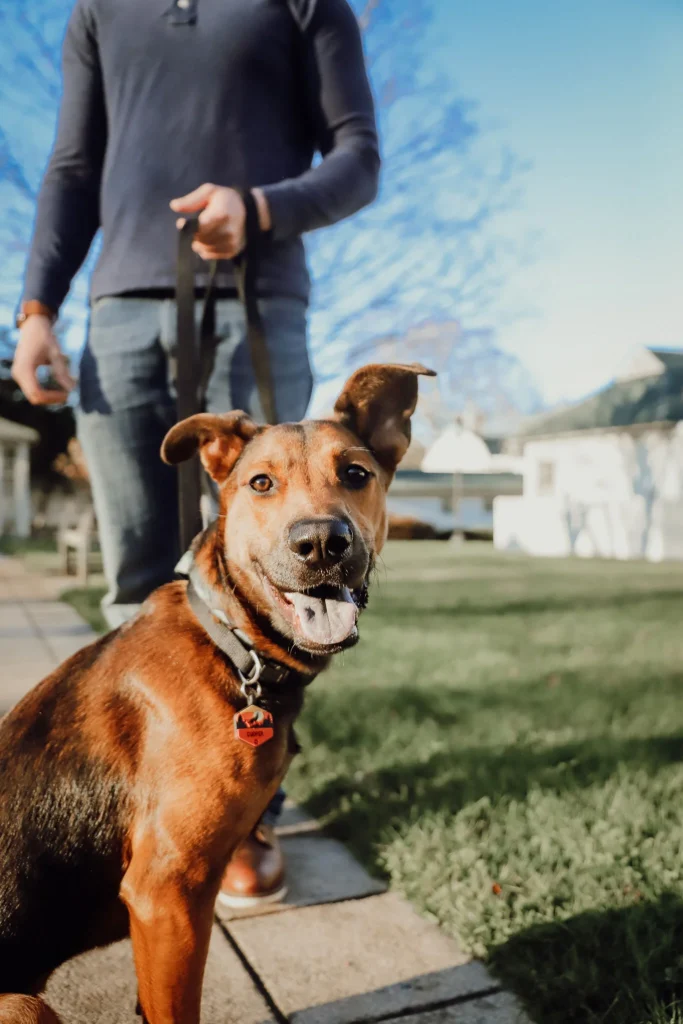
You can learn more about them here: Venture Dog Walking.
A business like this can benefit dog owners who need dependable support during workdays, busy seasons, or travel. From a training perspective, though, the dog’s preparation still matters. Dog walking training helps your dog greet the walker calmly, transition out the door safely, and handle outdoor distractions with better focus.
To be clear, Off Leash K9 Training Winston-Salem Dog Trainers is the training provider. Venture Dog Walking is the featured local dog-related business that can support families who need walking and care services.
How dog walking training improves daily behavior
Walks affect more than exercise. They influence your dog’s state of mind. A chaotic walk can make a dog more wired. A structured walk can improve focus, reduce frustration, and build dog confidence.
At Off Leash K9 Training Winston-Salem Dog Trainers, I use dog walking training to support:
- Better leash manners
- More reliable obedience training
- Calmer transitions at doors and gates
- Less reactivity around common triggers
- Stronger engagement with the handler
- Long-term off-leash reliability, when the dog is ready
This is where real behavior transformation happens. We are not just trying to “get through the walk.” We are teaching the dog how to think and respond while moving through the world.
If you want a good companion read on how obedience changes everyday life, I recommend The Gift of Obedience Training.
When a dog walker needs extra structure from you
Even a skilled walker will have a harder time if the dog has no consistent rules. Your job is to make the handoff clear and repeatable.
Before your walker arrives, consider writing down:
- Your dog’s known cues
- Leash equipment used
- Triggers to avoid
- Feeding or treat rules
- Whether greetings with other dogs are allowed
- What calm behavior should be rewarded
This helps keep dog walking training consistent between you and the person handling your dog.
If your dog pulls hard, reacts to other dogs, or struggles with doorway control, a training program can help. Our Dog Training Programs include options like Basic Obedience, Private Lessons, and Board and Train, depending on your goals and your dog’s needs.
Ready for calmer walks and easier handoffs?
If walks feel chaotic or your dog struggles when someone else handles them, dog walking training is a practical place to start. With the right structure, your dog can learn calmer greetings, better leash manners, and more reliable responses around distractions.
Reach out to Off Leash K9 Training Winston-Salem Dog Trainers through our contact page and tell me what happens when the leash comes out, when the door opens, or when your walker arrives. We’ll build a plan that makes walks safer, calmer, and more useful for your dog.