
Key Takeaways
- Learning how to potty train a puppy starts with a simple, repeatable daily routine built around potty breaks, meals, sleep, and play.
- Most puppies need to go out first thing in the morning, every 1 to 3 hours during the day depending on age, and after eating, drinking, playing, or napping.
- Crate training, close supervision, and positive reinforcement can help reduce accidents and support clearer house training.
- Many puppies make strong progress with potty habits within 4 to 6 months, but full reliability can take longer depending on age, breed size, health, consistency, and supervision. Nighttime dryness may come later than daytime success for some puppies.
- Persistent accidents, sudden regression, or signs of illness mean it is time to speak with a veterinarian or consider professional puppy training support in Winston-Salem.
How to Potty Train a Puppy With a Simple Daily Routine
Bringing a new puppy home to Winston-Salem is exciting, but figuring out how to potty train a puppy without constant stress is one of the first real challenges every dog owner faces. The puddles on the floor, the frantic rushes to the door, and the uncertainty about whether your pup actually “gets it” can make the first week feel overwhelming.
The good news is that potty training is really about teaching your puppy where and when to go using a predictable routine, supervision, and rewards. It does not require punishment or complicated methods. This article walks through what puppy potty training means, how often to give potty breaks, a sample schedule, how crate training fits in, and exactly what to do when accidents happen.
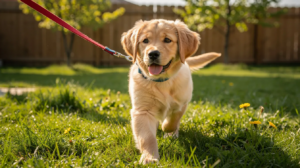
Quick Summary: A consistent routine paired with a designated potty spot and close supervision is one of the clearest paths to a house-trained puppy. As a general rule, many puppies can hold their bladder for about one hour per month of age, give or take an hour, but this should be treated as a maximum guide rather than a daily target. Crate training and positive reinforcement can help puppies learn to wait for scheduled potty breaks and build better habits outside. Setbacks and regressions are common and can often be improved by returning to basics and tightening the schedule.
What Puppy Potty Training Really Means
There is a difference between a puppy that is “potty trained” and one that is completely house trained. A potty-trained puppy is learning the rules. A house-trained adult dog follows them reliably and independently, even when you are not watching.
- Puppy potty training is teaching a clear rule: bathrooms are outside (or on a chosen potty pad area), not anywhere else in the house.
- Timing, routines, and supervision shape a puppy’s potty habits while their bladder and bowel control continue to mature over the first several months.
- A consistent routine helps puppies learn where to eliminate. Establishing a routine reduces accidents and creates a cleaner home.
- Early structure in potty training connects directly to overall puppy obedience and calm behavior, making future training easier for both the puppy and the family.
- Medical issues, fear, loud noises, or anxiety can all affect house training. These situations are addressed later in this article.
- Many dogs thrive when their day has a predictable rhythm, and potty training is the foundation of that rhythm.
How to Potty Train a Puppy With a Daily Routine
Building a daily routine is the single most effective way to potty train a puppy. Here is how to structure each day:
- Start each morning at a consistent time, such as 6:30 to 7:00 a.m., by taking your pup straight from the dog crate or sleeping area to the outdoor potty spot on a leash.
- Link every key daily event to a potty break: after waking, after meals, after drinking from the water bowl, after play sessions, and after naps.
- Use the same exit door and the same potty spot outside every time. This builds strong associations and makes house training clearer for your puppy.
- Follow a simple loop: potty break, quiet praise, brief play or walk, supervised indoor time, then another scheduled potty break before freedom increases.
- Keep a training treat pouch near the door so you can treat immediately after a successful potty outside.
- Pet parents with long workdays in Winston-Salem may need midday help from a family member, neighbor, or dog walker to keep the consistent routine going throughout the day.
- Consistent schedules help manage puppies’ potty needs effectively, and even small changes in routine can lead to more accidents.
How Often Should Puppies Go Potty?
As a general rule, puppies may be able to hold their bladder for about one hour per month of age during waking hours, give or take an hour. A two-month-old puppy may need to go out very frequently, while an older puppy may gradually stretch longer as they mature. Treat this as a rough ceiling under calm conditions, not a daily target.
- At 8 to 10 weeks old, most puppies need potty breaks every 60 to 90 minutes when awake. Some puppies should go outside every 30 to 45 minutes while awake during active play periods.
- Take puppies outside after meals, naps, and every couple of hours to prevent accidents.
- Excitement, drinking, playing, and changes in activity can all increase how often a puppy needs to go.
- Small breeds have smaller bladders and often need more frequent breaks than large breeds.
- Common signs a puppy needs to go include sniffing, circling, suddenly leaving the room, or scratching at the door. Puppies may also bark or scratch at the door when they need to go.
- Nighttime potty breaks are less frequent but still necessary for young puppies, often every 3 to 4 hours at first.
- Track patterns for a few weeks using a simple log with times for meals, water, play, naps, and each potty break. This helps you see what is working and where gaps exist.
Simple Puppy Potty Training Schedule
Here is a sample weekday schedule for a 10- to 12-week-old puppy in a typical Winston-Salem home. Adjust times to fit your life, but keep the spacing and triggers consistent.
Morning
- 6:30 a.m.: Wake up, carry or leash-walk the puppy directly to the designated potty area. Wait quietly until the puppy eliminates, then praise.
- 7:00 a.m.: Breakfast on a regular feeding schedule.
- 7:15 a.m.: Potty break right after eating. Most puppies need to go within 10 to 20 minutes of a meal as their digestive system gets moving.
- 7:30 to 8:00 a.m.: Supervised play or short training session indoors, then another potty break before crate rest.
Midday
- 11:00 a.m. to 12:00 p.m.: Potty break (a family member, neighbor, or dog walker can handle this if you work away from home). Short walk to the same area, brief play, then back to the crate or a gated particular area like a laundry room with a chew toy.
- 2:00 p.m.: Another potty break, short interaction, then rest.
Evening
- 5:00 p.m.: Potty break after you return. Supervised play or leash walk.
- 5:30 p.m.: Dinner.
- 5:45 p.m.: Potty break right after eating.
- 7:00 to 8:00 p.m.: Calm indoor time, gentle enrichment, or practice with basic obedience. Take the puppy to the potty spot once more during this window.
Night
- 10:00 to 10:30 p.m.: Final potty trip. Calm transition into the dog crate, with the sleeping space kept cozy and properly sized so the puppy cannot easily potty in one corner and sleep in another.
- 2:00 to 3:00 a.m.: One planned nighttime potty break for very young puppies. Carry or leash-walk quietly to the spot, then straight back to the crate.
As the puppy matures and has several clean weeks, gradually stretch the time between breaks. Many puppies become more reliable within a few months when the schedule stays consistent, but full house training can take longer depending on age, breed size, health, and supervision.
Choosing and Using a Consistent Potty Spot
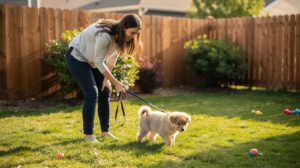
- Pick a small, quiet area of your backyard in Winston-Salem as the primary designated potty area, away from heavy foot traffic and play equipment.
- Take the puppy on a leash to this same potty spot every time. Taking puppies to the same designated location helps them recognize the spot for elimination.
- Scent helps puppies learn. Leaving one small area of grass not heavily cleaned can reinforce the right potty locations.
- Apartment dwellers can use a grass patch on a balcony or a specific potty pad area as the designated area if outdoor access is limited. A litter box-style indoor setup is another option for very small breeds.
- Use a consistent cue phrase such as “go potty” spoken once the dog eliminates at the same place, then praise softly afterward. Using a consistent cue helps puppies associate a command with the action of eliminating.
- Avoid turning potty trips into long play sessions until after the puppy has finished. If the puppy learns that potty time means extended outdoor fun, they may delay going to extend the outing.
- Return to the same spot as often as possible so the puppy learns that this particular area is the main place for potty breaks.
How to Reward Successful Potty Breaks
Positive reinforcement is one of the most reliable ways to teach good habits. Puppies can begin learning proper potty habits within a few weeks when rewards are well-timed, but full reliability usually takes longer and depends on consistency, age, and supervision.
- Rewards should be given immediately after the puppy eliminates outside, ideally within 1 to 2 seconds, to build the connection between the behavior and the reward. Treat immediately after the puppy finishes.
- Use tiny, high-value treats plus quiet verbal praise so the puppy does not get overexcited and forget to finish eliminating.
- “Name” the potty behavior with a simple phrase like “go potty” that is only used during potty time. This becomes the cue over time.
- Mix in life rewards such as a short walk, sniff time, or a calm game after the puppy potties where you want.
- Praise and treats encourage desired potty behavior in dogs. Rewarding good behavior helps dogs associate elimination spots with praise.
- Avoid rewarding too early, such as the moment the puppy squats, which can lead to incomplete elimination and accidents back inside.
- Positive reinforcement can help keep training calm and encouraging, which is especially important for sensitive or new puppy arrivals. Consistent reward-based training also helps build trust between you and your new dog.
What to Do When Your Puppy Has an Accident
Even with a great potty training schedule, most puppies will still have occasional indoor accidents during the first several months. Accidents are a natural part of the potty training process, and how you respond matters more than the accident itself.
- If you catch your puppy in the act, calmly say “outside” and lead them quickly to the potty spot. Redirect your puppy to the correct potty spot immediately if caught mid-accident.
- Do not punish your dog for accidents indoors. Never rub a dog’s nose in urine, yell, or scold after the fact. Puppies cannot connect punishment with past mistakes. Accidents should be handled calmly without scolding the puppy.
- Clean all soiled areas with an enzymatic cleaner designed for pet messes so lingering odor is reduced and the puppy is less likely to return to the same spot.
- Temporarily restrict freedom to one or two easy-to-clean rooms using baby gates if accidents keep happening, and increase supervision. Too much freedom too early is a common cause of more accidents.
- Treat each accident as information. If accidents increase, the schedule, supervision, or crate timing likely needs adjustment.
- Puppies need supervision indoors to prevent accidents. If you cannot watch, crate or confine the puppy in a safe space.
- Sudden frequent accidents in an otherwise well trained puppy may signal medical issues that require a veterinarian’s exam.
Crate Training and Puppy Potty Training
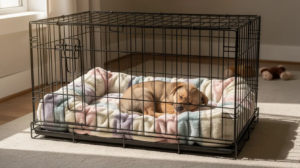
Crate training can be one of the most helpful tools for house training because many dogs avoid soiling the area where they sleep. A properly sized dog crate can support a potty training schedule when it is used for appropriate lengths of time and paired with frequent potty breaks.
- Choose a crate size that allows the puppy to stand up, turn around, and lie down comfortably. If the crate is too large, the puppy may potty in one corner and sleep in another, which can slow learning. Use a divider as the puppy grows so there is enough room for comfort without excess space.
- Introduce the crate gradually with treats, meals inside the crate, and short doors-closed sessions. Keep it a positive place, never a punishment. For a deeper guide, check out Crate Training 101: The Simple Positive Approach.
- Always give a potty break before crating and take your puppy to the potty spot immediately after letting them out. This reinforces “crate time, then potty time.”
- Crate training can reduce indoor accidents during potty training when it is used correctly. It helps puppies practice waiting between scheduled outings, but it should always be paired with age-appropriate potty breaks.
- Leaving a puppy too long in the crate can force them to soil their sleeping area, which slows house training and increases stress. Use your puppy’s age, recent potty history, activity level, and veterinarian or trainer guidance to decide how long crating is appropriate.
- Some families use a crate plus a small attached playpen during the day with potty pads at the far end if they must be gone longer than the puppy can hold it.
- A calm, crate-comfortable puppy often travels better, handles vet visits more easily, and rests more peacefully at home. This foundation supports broader puppy obedience down the road, including preparing your dog for a busy family life.
Common Puppy Potty Training Mistakes
Even experienced dog owners make mistakes during puppy potty training. Here are the most common errors and how to fix them:
- Giving too much freedom too soon. Use baby gates, tethers, and crates to limit roaming until the puppy has earned access to more of the house with clean behavior.
- Inconsistent routines. Changing feeding and potty times daily confuses puppies. Set phone reminders or alarms to stay on a regular schedule.
- Punishing accidents. This can make puppies afraid to potty in front of people, leading to sneaking off to eliminate in hidden corners. Replace punishment with calm redirection and rewards for good behavior.
- Relying on potty pads long-term without a clear transition plan. If the goal is to eliminate outdoors only, move the pads gradually closer to the door and then outside over time. Bell training (hanging a bell on the exit door for the puppy to ring) can help bridge this gap.
- Missing early warning signs like sniffing, circling, or suddenly leaving the room. These signals often appear seconds before an accident. Keeping the puppy tethered to you helps you catch them.
- Not adjusting the potty schedule as the puppy grows. What works for a new puppy at 8 weeks will not match the needs of a 5-month-old. Stretch intervals as bladder control improves.
- Feeling stuck? Keep a simple log for several days. Patterns and mistakes become much easier to spot when written down. Many puppies improve once the routine becomes clearer and more consistent.
Nighttime Potty Training Tips
Nighttime potty training is different from daytime because every interaction should stay calm, quiet, and boring. The goal is for the puppy to go and get right back to sleep.
- Take a final potty break late in the evening, around 10:00 to 11:00 p.m., before settling the puppy into the crate.
- Set an alarm for one planned nighttime potty break for very young puppies rather than waiting for whining, which may already follow an accident. As puppies mature and stay dry more consistently, you can gradually space out nighttime breaks.
- Carry or lead the puppy calmly to the same potty spot on a leash. Give them a few minutes to eliminate, then return straight to the crate with minimal talking and no play.
- Gradually space out nighttime breaks as the puppy proves they can stay dry. Aim for a full night only when there have been several clean nights in a row.
- Limiting water intake for about an hour before bed, while still ensuring adequate hydration during the day near the water bowl, can help some puppies stay comfortable at night. Do not restrict water during active daytime hours.
- Many puppies can begin sleeping through the night without a potty break around 4 to 6 months, though some puppies, especially small breeds or puppies with medical or schedule-related factors, may take longer.
When Puppy Potty Training Regression Happens
Potty training regression is a period when a previously reliable puppy starts having more accidents again after weeks or months of progress. It is frustrating, but it is common and usually temporary.
- Triggers include schedule changes, moving to a new puppy home, visitors staying over, storms, construction noise, or big life events like a new baby or family member.
- Adolescent dogs around 6 to 12 months old may test boundaries and need reminders of early house training lessons. Marking behavior can also emerge during this stage, especially in intact males. If marking becomes a concern, discuss training, management, health screening, and spay or neuter timing with your veterinarian.
- Return to basics for one to two weeks: more supervision, more frequent potty breaks, renewed use of the crate, and high-value rewards for correct potty behavior.
- Rule out medical causes like urinary tract infections, especially if accidents suddenly begin after a long dry period.
- Keeping a calm attitude and a consistent routine usually brings puppies back on track faster than frustration or punishment. Unwanted behaviors often fade when the structure returns.
When to Contact a Veterinarian
Sudden changes in potty habits in a puppy who was mostly house trained can be a red flag for health issues, especially if paired with other symptoms.
- Warning signs to watch for: straining to urinate, frequent small puddles, blood in urine, strong odor, excessive licking of the genital area, diarrhea, or noticeable discomfort.
- Contact a local Winston-Salem veterinarian if accidents increase despite a solid routine and no obvious training gaps.
- A simple physical exam and tests can rule out urinary tract infections, digestive problems, or other conditions that make holding it difficult for a puppy or adult dog.
- Bring a log of recent potty times, accidents, diet, and water intake to the appointment. This helps the vet pinpoint issues faster and distinguish between training gaps and medical issues.
When Professional Puppy Training May Help
Professional puppy training can help when dog owners feel overwhelmed, have inconsistent schedules, or see multiple behavior issues alongside potty accidents. Sometimes an outside perspective makes a significant difference.
- Trainers in the Winston-Salem area can coach pet parents on supervision, crate training, leash skills to reach the potty spot quickly, and basic puppy obedience that supports calm routines. Learn more about local puppy training in Winston-Salem, NC.
- Structured puppy programs may include guidance on socialization, handling distractions outdoors, and building confidence, all of which can support a calmer, more consistent potty training routine.
- Look for trainers who use clear communication, positive reinforcement, and realistic expectations rather than harsh corrections.
- Even a single puppy training consultation can help fine-tune a potty training schedule, troubleshoot accidents, and help families stay consistent.
- If you want stronger obedience and more reliable house manners for your puppy or adult dog, adding professional help to your training plan can provide structure, troubleshooting, and support that carries beyond the potty training phase.
Final Thoughts
Learning how to potty train a puppy takes patience, consistency, and a simple daily routine built around potty breaks, supervision, crate training, and positive reinforcement. Every clean day is progress toward a calmer home and stronger house manners.
If you are a pet parent in Winston-Salem or the Triad area and want help building a reliable potty training schedule, reach out today. Support with crate training, leash manners, basic obedience, and calm behavior can help your puppy build better habits over time.
FAQs
Here are common questions from puppy owners about potty training, with clear answers you can put to use right away.
How long does it take to potty train a puppy?
Many puppies make strong progress with potty habits within 4 to 6 months, though some learn faster and others may take closer to a year. Age, breed size, routine consistency, health, and the level of owner supervision all affect the timeline. Nighttime dryness may come after daytime success for some puppies. Focus on steady progress and fewer accidents over time rather than hitting a fixed deadline.
How often should I take my puppy outside?
A common guideline is that puppies may be able to hold their bladder for about one hour per month of age during the day, give or take an hour, but very young puppies often need trips as often as every 60 to 90 minutes while awake. Always take the puppy out after waking, eating, drinking, playing, and before and after crate time. Using phone alarms or a written schedule helps you stay consistent until the routine feels automatic.
Should I punish my puppy for accidents?
No. Punishment after accidents confuses puppies and can make them afraid to eliminate in front of people, which leads to hiding accidents in closets or behind furniture. Calmly interrupt if caught in the act, take the puppy to the correct potty spot, and clean accidents with an enzymatic cleaner. Put your energy into tightening supervision and rewarding correct potty behavior instead.
Can crate training help with potty training?
Crate training can be one of the most helpful tools for house training because many puppies avoid soiling the area where they sleep. A properly sized crate paired with regular potty breaks can support better potty habits between scheduled outings. Introduce the crate positively and never leave puppies confined longer than they can comfortably handle based on their age, recent potty history, and routine.
Why is my puppy still having accidents indoors?
Common reasons include too much freedom in the house, missed potty breaks, unclear potty locations, or the puppy simply being very young with limited bladder control. Go back to basics with more supervision, more frequent trips outside to the same area, and stronger rewards for success. If accidents suddenly increase or come with changes in urine, stool, or overall health, contact a veterinarian to rule out medical concerns.
