
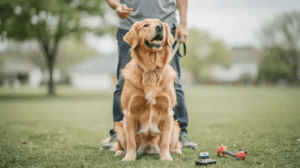
The main types of dog training methods include reward-based training, balanced training, correction-based approaches, and relationship-focused training. Within those approaches, trainers may use techniques such as clicker training, luring, capturing, shaping, and targeting.
These terms describe different parts of the training process. A clicker is a tool for marking behavior. Positive reinforcement is a learning process. Private lessons and Board & Train are service formats. Understanding the difference helps you compare programs without relying on marketing labels alone.
For owners choosing an approach, the American Veterinary Society of Animal Behavior recommends reward-based methods for teaching skills and addressing behavior problems. Effective plans also include management, appropriate practice conditions, attention to health, and owner instruction.
Off Leash K9 Training Winston-Salem advertises a reward-based Basic Marker Mastery™ program alongside obedience programs that include electronic collars. Ask about the procedures and equipment used in the specific program you are considering.
This guide explains the major approaches, practical teaching techniques, training tools, and questions to ask before hiring a trainer in Winston-Salem or the surrounding Triad.
Dog Training Methods, Techniques, Tools, and Formats
A single training session can involve several labels at once. For example, an owner might attend a private reward-based lesson, use a verbal marker, and shape a dog’s behavior toward settling on a mat.
Those descriptions are compatible because they answer different questions.
| Category | Question it answers | Examples |
| Learning process | How does experience change behavior? | Positive reinforcement, classical conditioning |
| Teaching technique | How is the behavior introduced or developed? | Luring, capturing, shaping, targeting |
| Training approach | What principles guide the trainer’s choices? | Reward-based, balanced, relationship-based |
| Equipment | What tools are involved? | Clicker, harness, long line, electronic collar |
| Service format | How is instruction delivered? | Private lessons, group classes, Board & Train |
| Training goal | What skill or concern is being addressed? | Recall, puppy foundations, cooperative care |
This distinction prevents misleading comparisons. Clicker training and positive reinforcement are not competing options. Puppy training is an application of training principles, while behavior modification describes work on particular behavioral concerns.
When a trainer describes a program, ask for an example of what happens during a lesson. The explanation should cover what the dog does, what the trainer does next, and how the plan changes when the dog struggles.
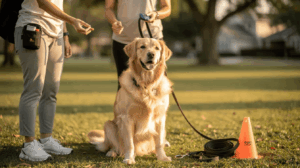
How Dogs Learn: Associations and Consequences
Two important learning processes are classical conditioning and operant conditioning. They often occur together, even when a session focuses on only one skill.
Understanding both helps you evaluate whether a plan addresses the dog’s behavior, emotional response, or both.
Classical Conditioning
Classical conditioning involves learning associations between events. A dog may become excited when you pick up a leash because the leash predicts a walk. Another dog may become worried when approaching a veterinary clinic because previous visits were uncomfortable.
These responses can begin before anyone gives a cue.
Associations matter during training too. A recall cue that repeatedly predicts scolding may become unpleasant. A grooming tool introduced through comfortable, rewarding practice may develop a different meaning.
This is one reason to consider how a dog experiences the whole session. Performing a requested behavior does not, by itself, show that the dog feels comfortable.
Operant Conditioning
Operant conditioning describes how consequences influence behavior.
Reinforcement increases behavior. Punishment decreases behavior. In this terminology, “positive” means adding something, while “negative” means removing something.
The terms describe a learning process, rather than whether the procedure is pleasant or appropriate.
| Learning process | Meaning | Example |
| Positive reinforcement | Adding something that increases behavior | Giving a treat after a sit, with sitting becoming more frequent |
| Negative reinforcement | Removing something aversive to increase behavior | Releasing uncomfortable pressure when the dog moves into position |
| Positive punishment | Adding something that decreases behavior | Applying an unpleasant correction, with the preceding behavior decreasing |
| Negative punishment | Removing something valued to decrease behavior | Briefly withdrawing desired attention after jumping, with jumping decreasing |
These examples explain mechanisms; they are not recommendations to use corrections.
The dog’s response determines the function. A treat is reinforcement only if it increases the behavior it follows. A correction has not functioned as punishment if the targeted behavior does not decrease.
Likewise, turning away from a jumping dog only removes a reward if the dog wanted that attention. The same action can have different effects depending on the situation.
Behavior and Comfort Are Separate Measures
A dog can become quieter while remaining afraid. A dog can also understand a cue but struggle to respond around a distraction that exceeds its current training.
Evaluate both performance and comfort. Useful observations include whether the dog approaches willingly, can disengage from distractions, participates comfortably, and recovers after something unexpected.
No single body-language sign proves an emotional state. Consider the pattern, environment, and changes from the dog’s usual behavior.
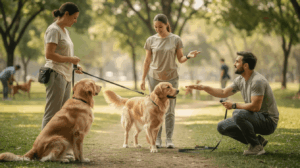
Major Types of Dog Training Methods
Training labels are useful starting points, but their meanings can vary. Ask how the trainer applies the approach rather than assuming the label tells you everything.
Positive Reinforcement and Reward-Based Training
Positive reinforcement increases behavior by adding something the dog values. Rewards may include food, toys, play, praise, or access to an activity.
For example, an owner rewards a dog for looking back during a walk. If that response becomes more frequent, the reward has reinforced attention to the owner.
Reward-based training also involves arranging situations where the dog can succeed. An owner may use a gate during guest arrivals, practice greetings at a comfortable distance, and reward four paws on the floor.
The plan teaches a useful alternative while managing opportunities to rehearse unwanted behavior.
What to look for:
- Rewards chosen according to the individual dog.
- Clear timing and understandable cues.
- Gradual increases in difficulty.
- Management of predictable problems.
- Instructions owners can follow between lessons.
Reward-based training does not mean waiting for dangerous behavior and ignoring it. Physical safeguards, barriers, routines, and appropriate boundaries remain part of the plan.
Force-Free Training
Force-free generally describes an approach that avoids intentionally using pain, fear, or intimidation.
It commonly overlaps with reward-based training, although the label does not specify every procedure. Some plans include briefly removing access to desired attention or play, which learning theory calls negative punishment.
Ask how the trainer handles mistakes, frustration, and safety concerns. A useful answer should explain prevention, redirection, alternative behaviors, and adjustments to the task.
A trainer should also recognize when the problem needs veterinary or specialized behavioral assessment.
Balanced Training
Balanced training generally combines rewards with aversive consequences. Depending on the trainer, these may include leash corrections, pressure, electronic stimulation, or other unpleasant events intended to influence behavior.
The term is not a standardized protocol. Two balanced trainers may use very different procedures, frequencies, and equipment.
Ask what happens when a dog does not respond. Does the trainer simplify the task, change the environment, or introduce a correction? How is the dog’s response monitored?
Professional involvement, low equipment settings, and pairing corrections with rewards do not establish that an aversive procedure is harmless. The dog’s experience and the evidence supporting the procedure still matter.
Correction-Based Training
Correction-based training places substantial emphasis on stopping unwanted behavior through unpleasant consequences.
It may suppress a visible response, but stopping a behavior does not necessarily teach an appropriate replacement or change the underlying motivation.
For example, reducing barking around another dog does not establish that fear or frustration has improved. Assessment should consider how the dog behaves and feels throughout the interaction.
Current AVSAB guidance recommends reward-based methods and advises against aversive techniques. Owners comparing programs should ask about alternatives and how the trainer addresses the cause of the behavior.
Dominance-Based Training
Dominance-based training interprets unwanted behavior as a challenge to human rank. It may involve confrontational handling, forced submission, or household rules presented as ways to become the “alpha.”
Dominance relationships can exist between animals. That does not justify treating ordinary problems such as jumping, pulling, or inconsistent recall as attempts to control the household.
The AVSAB dominance position statement cautions against using dominance theory to justify confrontational training.
Assess practical causes instead: What has the dog learned? What is rewarding the behavior? Is the environment too difficult? Could fear, discomfort, or another health concern contribute?
Relationship-Based and Cooperative Training
Relationship-based training emphasizes communication, individual needs, body language, and trust.
In practice, it may involve adjusting sessions when the dog is overwhelmed, using enjoyable activities as rewards, and teaching handling in manageable steps.
Cooperative care applies related principles to grooming and veterinary preparation. A dog might learn to rest its chin on a hand or support while the owner practices a brief handling movement.
The exercise should allow comfortable participation and opportunities to pause. Necessary medical care requires coordination with veterinary professionals.
“Relationship-based” does not guarantee that a trainer avoids aversive techniques. Ask what the approach looks like during an actual session.
Science-Based Training
Science-based training should involve using research, assessing the individual dog, measuring outcomes, and changing the plan when evidence warrants it.
The label alone is not a credential. A useful plan identifies a specific goal, records relevant observations, and explains why the proposed techniques fit the situation.
You may also encounter LIMA, meaning “least intrusive, minimally aversive.” It is an ethical framework rather than a separate learning mechanism.
Ask the trainer to describe actual procedures and current professional guidance. An acronym does not establish which equipment will be used or how the dog’s welfare will be evaluated.
Practical Techniques for Teaching New Behaviors
Reward-based training can use several techniques within the same lesson. Choosing among them depends on the behavior, the dog’s comfort, and the owner’s ability to deliver rewards accurately.
Luring
Luring uses something the dog follows, commonly food or a toy, to guide movement.
For a sit, an owner may move a small treat slowly from the dog’s nose slightly upward and backward. When the dog sits comfortably, the owner marks and rewards the response.
Some dogs will step backward, jump, or remain standing. That is information to adjust the movement or try another technique, rather than physically forcing the position.
As the behavior develops, fade the visible food lure and introduce a clear cue. Rewarding afterward can continue even when food is no longer shown before the response.
Capturing
Capturing means rewarding a useful behavior when the dog offers it naturally.
An owner might notice the dog resting calmly on a mat and deliver a reward there. Repeatedly rewarding suitable moments can help make that behavior more frequent.
Choose reward delivery that supports the goal. If calling the dog across the room interrupts settling, placing the reward calmly near the mat may be more useful.
Capturing requires observation and timing. It works best when owners have appropriate rewards available and a clear idea of which behavior they want to encourage.
Shaping
Shaping develops a behavior by reinforcing small steps toward the final response.
To teach a dog to go to a mat, the owner might reward looking toward it, moving closer, stepping onto it, and eventually settling there.
Progress should remain manageable. If the dog repeatedly struggles, return to an easier step or simplify the setup.
Shaping can support precise or complex skills, but it is not automatically frustration-free. Criteria that change too quickly can make the task confusing.
The MSD Veterinary Manual’s behavior-modification overview describes shaping and other commonly used behavioral techniques.
Targeting
Targeting teaches a dog to touch or move toward a specific target.
A common example is a nose touch to an open palm. The owner marks and rewards contact, then gradually introduces a cue and appropriate variations.
A hand target can provide a clear destination during a return or help position the dog during another exercise.
The AKC’s nose-targeting guide explains this progression.
Keep the target within comfortable reach. Avoid using food or a target to draw a worried dog closer to something it finds overwhelming.
Clicker and Verbal-Marker Training
A marker identifies the moment a behavior earns reinforcement. It may be a clicker sound or a consistent word such as “yes.”
First establish the association between the marker and a reward. During practice, mark the desired moment and follow it with reinforcement.
For example, an owner marks when the dog steps onto a mat, then delivers the reward there. This helps clarify which part of the movement earned it.
The marker does not replace the reward. Accurate timing and consistent follow-through matter more than choosing a particular device.
Review the AKC’s clicker-training explanation for another practical introduction.
Social Learning and Model-Rival Training
Dogs can learn information by observing people or other dogs. Model-rival training is one structured approach discussed in research and training literature.
Observation does not guarantee that a dog will copy a specific behavior. Attention, prior experience, the task, and the arrangement all influence what happens.
For everyday owner training, direct practice with clear reinforcement usually provides a more straightforward starting point.
Be cautious about claims that placing a worried dog beside a confident dog will automatically resolve fear. Comfortable exposure and individual assessment remain necessary.
Techniques for Fear, Reactivity, and Handling Concerns
Teaching obedience and changing an emotional response can involve different goals.
A dog that knows “sit” may still feel frightened by a nearby dog, unfamiliar person, or grooming tool. A behavior plan should account for that concern.
Desensitization
Desensitization introduces a trigger at a manageable intensity and changes exposure gradually.
Intensity can involve distance, volume, movement, duration, or another feature. A dog worried about other dogs might begin far enough away to remain comfortable.
Moving closer is not always the next useful step. The plan may first need shorter sessions, a quieter environment, or fewer moving distractions.
Repeatedly exposing a dog to an overwhelming situation is not the same as gradual desensitization. If distress increases, reduce the intensity and reassess.
Counterconditioning
Counterconditioning pairs a trigger with something the dog enjoys, with the aim of changing the learned association.
For example, a dog noticing another dog at a comfortable distance may receive an appropriate reward. The sequence and intensity should fit the individual case.
This differs from requiring obedience before every reward. When changing an association, the plan may focus on the appearance of the trigger rather than a particular response.
VCA’s introduction to desensitization and counterconditioning explains how the techniques can work together.
When Professional Assessment Matters
Seek veterinary assessment for sudden behavior changes, suspected pain, severe fear, aggression, or persistent separation-related distress.
A qualified behavior professional can help identify triggers, establish management, and measure progress. A veterinarian can assess medical contributors and determine whether treatment is appropriate.
Avoid judging improvement only by less barking or less movement. The plan should also consider comfortable participation, recovery, and the dog’s ability to disengage.
What Research Says About Training Methods
Research helps inform decisions, but individual studies have limits.
A 2020 observational study of 92 companion dogs found more stress-related behavior in mixed-method and aversive training groups than in the reward-based group.
Because the study was observational, it should not be described as a randomized experiment proving what will happen to every dog. It nevertheless provides relevant evidence about welfare concerns associated with the methods studied.
A separate 2020 study comparing electronic-collar and reward-focused training found advantages for the reward-focused group on several performance measures, including responses after a single instruction and response times.
Those findings did not demonstrate an efficiency advantage for electronic collars. Performance measures should also be distinguished from direct welfare measurements.
AVSAB’s current position recommends reward-based methods for all dog training, including behavior problems. Its guidance provides a clearer decision framework than assuming every approach carries equivalent benefits and risks.
Training Equipment and Its Limitations
Equipment supports a training or management plan. It does not teach the whole skill by itself.
Harnesses, Leashes, and Long Lines
A well-fitting harness and appropriately handled leash can help maintain physical control during practice.
Long lines allow more distance, but require suitable space and careful handling. Keep them clear of people, legs, and obstacles, and prevent the dog from accelerating into the end.
Do not wrap a line around your hands. A trailing line can snag or move beyond reach.
Recall practice does not eliminate risks from traffic, wildlife, unfamiliar dogs, or unexpected distractions. Keep physical safeguards where needed and follow the rules for the location.
Treat Pouches and Reward Selection
A treat pouch can help deliver rewards promptly. Small, suitable portions allow repeated practice while accounting for dietary needs.
Choose rewards according to the dog and environment. Food that works indoors may compete poorly with outdoor distractions, while another dog may prefer play.
Different rewards can be useful, but changing rewards does not solve an overwhelming setup. Distance, task difficulty, rest, and health may also need attention.
Avoid withholding necessary food or water to make training rewards more valuable.
Electronic Collars
Electronic collars may provide electrical stimulation, vibration, or tone. These functions are different, and none has a universal meaning to a dog.
Electrical stimulation can function as positive punishment or negative reinforcement depending on how it is applied. Calling it communication does not establish that the dog experiences it as nonaversive.
Low settings, professional involvement, and pairing stimulation with rewards do not remove potential welfare concerns.
The local guide to e-collar training for beginners discusses equipment, research, limitations, and reward-based alternatives.
Before enrolling, ask which functions are used, what happens when the dog does not respond, how distress is recognized, and whether another approach is available.
How Methods Apply to Common Training Goals
The same learning principles can support different goals. The plan should fit the dog’s development, health, environment, and current skills.
| Goal | Useful starting points | What to avoid assuming |
| Puppy foundations | Short reward-based practice, management, comfortable exposure | Early training guarantees prevention of later problems |
| Recall | Easy returns, rewarding arrival, gradual distractions, physical safeguards | A success percentage makes every off-leash setting safe |
| Loose-leash walking | Comfortable equipment, reinforcement near the owner, manageable routes | Equipment alone teaches the skill |
| Calm greetings | Preventing rehearsal, rewarding alternatives, gradual practice | Ignoring alone resolves every cause of jumping |
| Handling | Small comfortable steps, reinforcement, opportunities to pause | Stillness proves the dog is comfortable |
| Fear or reactivity | Assessment, management, individualized exposure work | Obedience alone resolves the emotional concern |
For puppies, ask your veterinarian about health precautions when planning socialization. Positive exposure should remain comfortable and developmentally appropriate.
For adult dogs, new behaviors can still be taught. Sudden difficulty with a familiar skill warrants consideration of health or environmental changes.
Choosing a Training Format in Winston-Salem
A method and a service format are separate decisions. Ask about both before selecting a program.
Reward-Based Marker Lessons
The local Basic Marker Mastery™ program is advertised as reward-based training and introduces come, sit, and place.
Ask how markers, rewards, equipment, and owner practice are used. Confirm how the trainer handles unwanted behavior and adjusts the plan when the dog struggles.
Puppy Training
Published puppy training options include early obedience foundations and guidance on common puppy concerns.
Confirm the format, curriculum, and eligibility for your puppy. Do not assume that every option uses the same lesson count or covers every topic in equal depth.
Private Obedience Lessons
Private dog training allows owners to practice alongside a trainer.
The local obedience programs describe foundational and advanced skills, with equipment varying by program.
Ask about homework, lesson arrangements, and how progress transfers into daily routines.
Board & Train
Board & Train programs involve the dog staying with a trainer during the program.
Ask about care, housing, training procedures, equipment, updates, and owner instruction. Confirm the follow-up arrangements for the selected option.
Program duration describes the format; it does not guarantee that every behavior will be resolved. Continued owner practice and management remain necessary.
Therapy Dog Preparation
The published program information includes therapy-dog preparation.
Suitability involves more than obedience. The dog should be comfortable with the interactions and environments involved. Preparation does not guarantee passing a testing organization’s evaluation.
Questions to Ask Before Hiring a Trainer
A clear explanation of procedures is more useful than a confident label.
Ask these questions before enrolling:
- What happens when my dog succeeds? Request examples of rewards, timing, and progression.
- What happens when my dog struggles? Ask whether the trainer simplifies the task, changes the setup, or introduces a correction.
- Which equipment will be used? Have every function and procedure explained.
- How do you recognize distress? Ask what prompts a break or change of plan.
- What qualifications are relevant to this concern? Verify credentials and their requirements.
- When would you refer to a veterinarian or specialist? Significant behavioral concerns may require coordinated care.
- What will I practice at home? Request clear instructions suited to your household.
- How will we measure progress? Agree on observable goals and review points.
Describe your own preferences clearly, including equipment you are uncomfortable using. A useful consultation should help determine whether the proposed program fits those preferences and your dog’s needs.
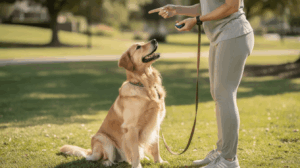
Common Training Problems and Practical Adjustments
The Dog Responds Only When Food Is Visible
The visible treat may have become part of the cue.
Practice easier repetitions, fade the food lure, and deliver the reward after the response. This changes when the food appears without removing reinforcement entirely.
The Dog Responds at Home but Not Outside
The new environment may exceed the difficulty practiced so far.
Reduce distance, choose a quieter location, and reward achievable responses. Generalizing a skill requires practice under manageable conditions.
Family Members Use Different Cues
Agree on the words, markers, release cues, and household expectations.
A short shared instruction sheet can help. Ask the trainer whether other household members can participate in owner instruction.
Sessions Become Frustrating
Shorten the session or take a break. Review the task, reward, setting, and the dog’s comfort.
You do not need to keep requesting another behavior merely to finish on a success. Rest and a simpler next session may be more useful.
Progress Stops
Check what changed before assuming stubbornness. Distractions, routines, reward delivery, discomfort, and emotional state can all affect participation.
Discuss persistent problems with the trainer. Sudden changes or signs of pain warrant veterinary assessment.
Frequently Asked Questions
Which dog training method is recommended?
AVSAB recommends reward-based methods for teaching skills and addressing behavior problems. Ask how a trainer’s actual procedures follow that approach, including management and responses to mistakes.
Are clicker training and positive reinforcement different?
Positive reinforcement is a learning process. A clicker marks a behavior that earns reinforcement. Clicker training commonly operates within a reward-based plan, and a consistent verbal marker can serve a similar purpose.
Does reward-based training mean no boundaries?
No. Leashes, gates, routines, access management, and teaching alternatives provide practical boundaries. The plan should prevent unsafe situations and teach the dog what to do.
Can different teaching techniques be combined?
Yes. A session may use luring to introduce movement, shaping to develop precision, and capturing to reinforce useful behavior during daily life. Combining these techniques does not require introducing aversive corrections.
Will my dog always need treats?
Visible food lures can be faded as the behavior develops. Reinforcement should remain appropriate to the task. Rewards can include food, suitable play, praise, the dog values, and access to activities.
Is a low-level electronic collar automatically harmless?
No. The setting and marketing description do not establish how the dog experiences stimulation. Ask about the procedure, potential welfare concerns, and reward-based alternatives.
How long should training take?
There is no universal timeline. Progress depends on the skill, learning history, health, environment, and practice. Measure specific changes rather than treating a program’s duration as a guaranteed deadline.
When should I seek veterinary behavior help?
Seek assessment for severe fear, aggression, persistent separation-related distress, sudden behavioral changes, or suspected discomfort. Training may form part of the plan, alongside management and veterinary treatment when appropriate.
Conclusion and Next Steps
Understanding the types of dog training methods helps you compare what actually happens during a session.
Start with reward-based options, choose manageable practice conditions, and ask how the trainer monitors both behavior and comfort. Separate the method from the equipment, service format, and training goal.
Before contacting a trainer, write down your main concerns, relevant health information, current skills, and equipment preferences. Ask for clear procedures, measurable goals, owner instruction, and a plan for adjusting difficulties.
For local guidance, contact Off Leash K9 Training Winston-Salem or call (336) 600-1885 to request a free phone consultation. Discuss which published program fits your goals and what methods and equipment it includes.