
Introduction
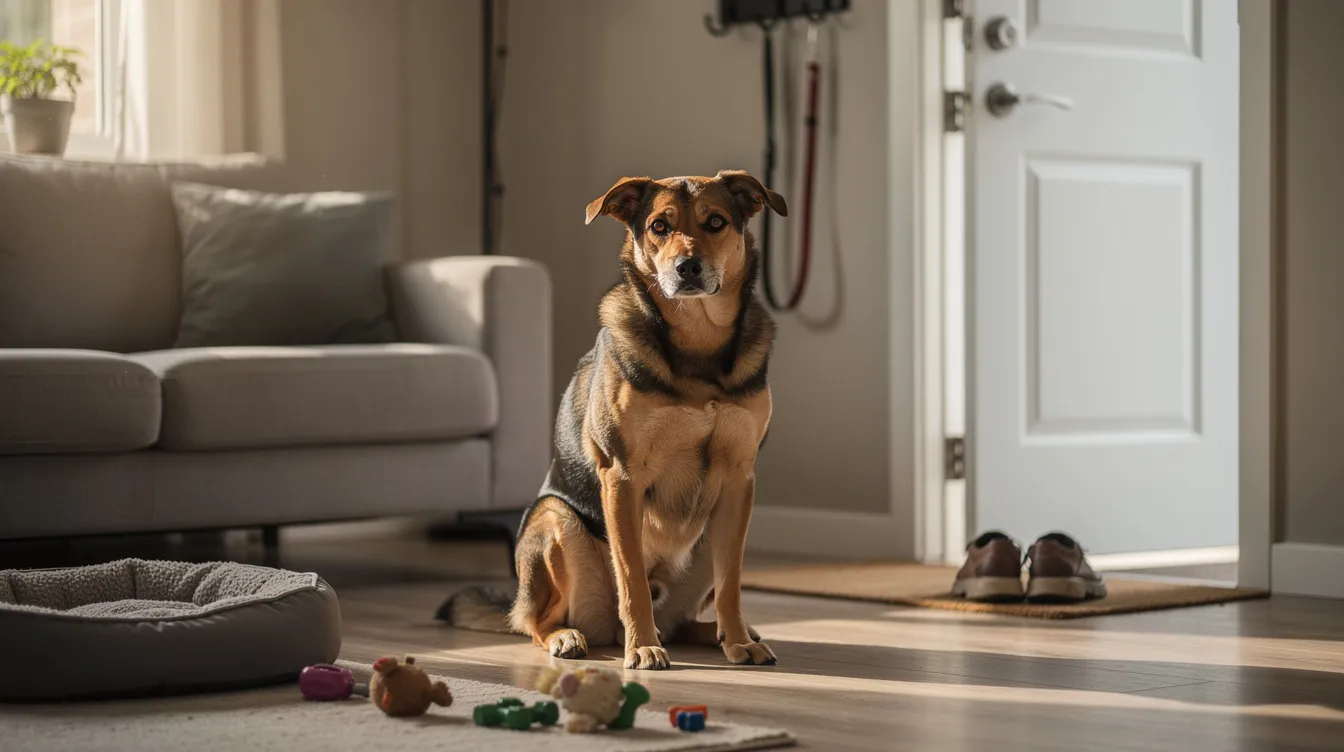
Separation anxiety in dogs is a clinical behavioral condition in which a dog experiences genuine distress-often resembling a panic attack-when separated from its owner or when departure cues begin. It is not a phase, a sign of spite, or simple misbehavior. This comprehensive guide covers how to identify true separation anxiety, what causes it, and the proven professional training solutions that produce lasting results.
This content addresses clinical diagnosis, behavior modification techniques, and professional training methods for canine separation anxiety. It does not replace veterinary advice for underlying medical problems such as urinary incontinence, cognitive dysfunction, or gastrointestinal disease. If your dog shows sudden behavioral changes, consulting a veterinarian is recommended to distinguish separation anxiety from other issues before beginning any training protocol.
If you’re a dog owner in the Winston-Salem or Triad NC area dealing with destructive behavior, excessive barking, or house soiling when you leave your dog home alone, this guide is written for you. Separation anxiety is a treatable behavioral condition. Research consistently shows that systematic desensitization, counter-conditioning, and professional training intervention-sometimes combined with drug therapy-produce significant, lasting improvement in most dogs.
After reading this guide, you will be able to:
- Accurately identify the common signs and symptoms of separation anxiety versus other behavioral issues
- Understand the genetic, developmental, and environmental causes behind why dogs develop separation anxiety
- Evaluate professional training approaches including desensitization, board-and-train, and private behavior modification
- Implement immediate management strategies to reduce anxiety and prevent self-injury
- Recognize when to seek a veterinary behaviorist or behavior modification specialist for severe cases
Understanding Separation Anxiety in Dogs
Canine separation anxiety is a clinical behavioral diagnosis characterized by significant distress when a dog is separated from its owner-or even when it perceives that separation is about to occur. It is distinguished from normal adjustment periods (such as a puppy settling into a new home), attention-seeking behavior, or bad habits driven by boredom. Prevalence studies estimate that between 6% and 20% of dogs in the general population experience some form of separation-related behavior, with higher rates found when researchers use detailed owner questionnaires or video review.
This condition matters deeply-both for the dog’s life and for the owner’s quality of life. Dogs suffering from untreated separation anxiety can injure themselves, destroy property, and live in a state of chronic stress. For owners, the emotional toll and practical consequences (damaged homes, noise complaints, strained relationships with neighbors) can lead to heartbreaking decisions, including relinquishment to a humane society or shelter. Early identification and intervention change outcomes dramatically.
Primary Symptoms and Behavioral Signs
Common symptoms of separation anxiety include excessive vocalization and destructive behavior, and these signs of separation anxiety can develop shortly after a person’s departure-often within 30 minutes of the owner leaving. Recognizing the specific pattern of anxiety-related behavior is the first step toward effective treatment.
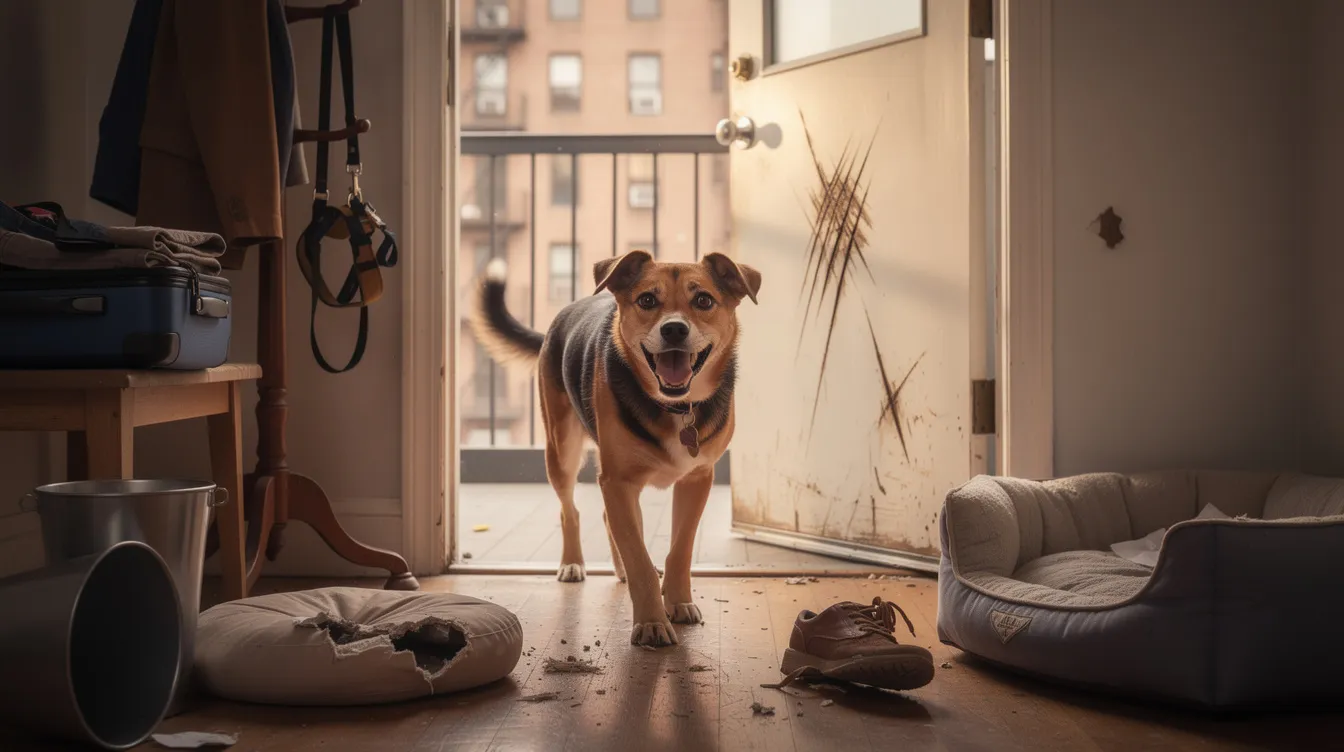
Destructive behavior targets doors, windows, and exit points. Destructive chewing and scratching concentrate around areas where the dog attempts to follow or reach the departing owner. Destructive behavior often occurs at exits like doors or windows. On rare occasions, the destruction extends to items carrying the owner’s scent, such as clothing or shoes.
Excessive vocalization is one of the most reported signs. Dogs with separation anxiety often bark or howl excessively, and this vocalization typically begins shortly after the owner’s departure and can persist for hours. Neighbors frequently report the problem before owners even realize its severity.
House soiling occurs even in completely house-trained dogs. Dogs may urinate or defecate when left alone due to anxiety-this is not a house training failure but a physiological stress response. House soiling can occur even in fully house-trained dogs experiencing separation anxiety, and these dogs urinate or defecate in areas near exit routes or the owner’s belongings.
Physical symptoms round out the clinical picture. Excessive salivation, panting, and pacing in a fixed pattern are common signs of heightened arousal. Escape attempts during separation can lead to severe self-injury in dogs, including broken teeth, torn nails, and lacerations around the muzzle and paws. Some dogs may refuse to eat when left alone due to anxiety, which helps distinguish true separation anxiety from simple boredom.
Separation Anxiety vs Other Behavioral Issues
Accurate diagnosis is essential because the treatment for separation anxiety differs fundamentally from treatments for other conditions that may look similar on the surface.
Boredom-related destruction happens regardless of owner presence. A dog that chews furniture while you’re in the next room is likely under-stimulated, not anxious. Dogs with true separation anxiety display anxiety and exhibit distress exclusively when separated from their person-they’re typically calm when the owner is home.
Incomplete house training and medical incontinence are frequently confused with separation anxiety. A dog that isn’t completely house trained will have accidents in varied circumstances, not exclusively during departures. Medical problems such as urinary tract infections, gastrointestinal disease, or age-related cognitive dysfunction require veterinary evaluation. Territorial marking also differs-it involves small amounts of urine on vertical surfaces and occurs regardless of the owner’s schedule.
Confinement anxiety and barrier frustration deserve separate consideration. Some dogs panic specifically when crated or confined, rather than when separated from their owner. Others become frustrated when they can see but cannot physically reach their person. These conditions may co-occur with separation anxiety but require distinct approaches-understanding the difference between crate training challenges and true separation anxiety is critical. Our guide on crate training addresses confinement comfort specifically.
With a clear diagnostic picture established, the next step is understanding what causes separation anxiety to develop in the first place.
Causes and Risk Factors
Separation anxiety has no single cause. Research points to a combination of genetic predisposition, early developmental experiences, life events, and ongoing environmental factors. Understanding the specific risk factors relevant to your dog helps shape the most effective separation anxiety treatment plan.
Life Changes and Trauma
Separation anxiety in dogs is a panic response to being left alone, and life disruptions are among the most potent triggers.
Dogs adopted from shelters are more prone to anxiety, likely because they’ve experienced the trauma of abandonment, rehoming, or prolonged kennel stays. Many dogs who pass through multiple homes develop deep attachment insecurities that manifest as distress behaviors during any subsequent separation.
The sudden absence of a family member-whether through death, divorce, a child leaving for college, or any change in household composition-can trigger separation anxiety even in previously stable dogs. Moving to a new residence can lead to separation anxiety as the dog loses the environmental familiarity that provided security. Schedule changes can trigger separation anxiety in dogs, particularly when an owner who was previously home full-time returns to an office routine. This pattern became especially prominent after the COVID-19 lockdowns, when extended home periods fostered over-attachment that many dogs weren’t equipped to handle when routines shifted back.
Genetic Predisposition and Early Development
Not all dogs respond to stress the same way, and genetics play a measurable role. Research on breed differences found that 57% of Labrador Retrievers from seven litters exhibited separation-related behaviors by 18 months, compared to approximately 35% of Border Collies from five litters in the same study. Genetic research has identified specific haplotypes at the DRD2 and AVPR1A gene loci in Golden Retrievers that are associated with higher separation anxiety scores, suggesting a biological predisposition in some lineages. Both male dogs and female dogs can develop the condition, though some studies show slightly higher prevalence in neutered animals.
Early development is equally important. Puppies separated from their littermates or dam before approximately 60 days of age, puppies acquired from pet stores, and dogs with limited socialization during the critical months of five through ten show greater vulnerability. Puppies need socialization to prevent future separation anxiety-exposure to brief, positive separations during puppyhood builds resilience. Puppies should learn to spend time alone to prevent anxiety from becoming entrenched. Our article on puppy fear periods explores how early developmental windows shape long-term behavioral outcomes.
Environmental and Management Factors
Ongoing management practices significantly influence whether a predisposed dog actually develops clinical anxiety. Lack of mental stimulation and insufficient physical exercise contribute directly to elevated anxiety levels. A dog that receives no structured outlets for energy is more likely to display anxiety when left alone.
Inconsistent departure routines create unpredictable stress triggers. When an owner sometimes makes emotional, drawn-out goodbyes and other times slips out silently, the dog never learns a predictable pattern, keeping arousal levels high. Owner attachment style also matters-being overprotective or providing constant physical contact can inadvertently prevent the dog from developing the independence needed to tolerate solitude.
Understanding these layered causes makes clear why effective treatment requires a structured, professional approach rather than a quick fix.
Professional Training and Treatment Approaches
Treating separation anxiety requires systematic behavior modification-not punishment, not simply buying a new dog toy, and not hoping the dog “grows out of it.” The most effective protocols combine desensitization, counter-conditioning, foundational obedience, environmental management, and-in severe cases-pharmaceutical support. Research consistently shows that professional intervention produces superior outcomes, particularly for moderate separation anxiety and severe separation anxiety.
Systematic Desensitization Protocol
Professional desensitization training is recommended whenever a dog continues to exhibit distress despite basic management changes, or when the anxiety is moderate to severe in intensity.
The protocol begins with departure cues rather than actual departures. Practice leaving without actually departing to reduce anxiety-pick up your keys, put on shoes, then sit back down. Repeat until the dog shows no reaction. Desensitization involves gradually increasing time alone for dogs, starting with absences of just a few seconds, then slowly extending duration as the dog’s tolerance builds. Each increment should be small enough that the dog remains below its stress threshold.
Counterconditioning can help reduce mild separation anxiety by pairing formerly distressing cues with positive experiences. Counterconditioning associates feared situations with positive experiences-for example, the owner picking up keys predicts a frozen Kong stuffed with canned dog food or high-value treats. Use toys stuffed with treats to distract anxious dogs, providing them only during departures so they become a unique positive signal. Low-key departures and arrivals can help reduce anxiety in dogs by removing the emotional charge from transitions. Positive associations during departures can help dogs with separation anxiety learn that being alone is safe.
Throughout the process, trainers monitor stress signals-lip licking, yawning, whale eye, panting-and adjust progression pace accordingly. If the dog continues to show distress, the trainer steps back to a shorter duration where the dog was previously successful. Short practice absences can help dogs adjust to being alone when repeated consistently over time. A study of eight dogs treated with systematic desensitization and counter-conditioning found that all showed significant reductions in both frequency and severity of separation-related behaviors, and six of those eight dogs were nearly free of symptoms after three months.
Providing structured mental and physical outlets before leaving can help reduce separation anxiety. A vigorous walk, a scent work session, or a training drill before departure lowers overall arousal and helps the dog settle more quickly.
Training Method Comparison
| Criteria | DIY Behavior Modification | Professional Private Training | Board-and-Train Program |
|---|---|---|---|
| Best for severity level | Mild separation anxiety | Mild to severe cases | Moderate to severe separation anxiety |
| Typical timeline | 8–16 weeks minimum | 6–12 weeks with guidance | 1–4 weeks intensive, plus owner transition |
| Success rate | Variable; ~75% show improvement with consistent application | High; tailored protocols address individual triggers | High; controlled environment enables rapid progress |
| Owner time commitment | High daily involvement required | Moderate; guided sessions with homework | Low during training; maintenance required after |
| Cost | Lowest | Moderate | Higher upfront, potentially lower total when accounting for faster results |
A study by Blackwell et al. found that approximately 75% of 15 dogs improved within the first six weeks of a standardized behavioral plan. For owners with demanding schedules or dogs with severe cases, a board-and-train program provides the consistency that home environments sometimes cannot. A major shelter rehabilitation program treated 441 extremely fearful dogs using desensitization, counter-conditioning, and operant conditioning over an average of 96 days and approximately 78 treatment sessions; 86% graduated the program, and the post-adoption satisfaction rate reached 99%.
Helping owners choose the right intervention level for their situation is part of what professional behavior evaluation accomplishes. The right fit depends on the dog’s anxiety severity, the owner’s schedule, and the home environment.
Integration with Obedience Training
Foundational obedience skills are not just about manners-they directly support separation anxiety treatment by building a dog’s confidence and independence. When a dog learns place, stay, and down-stay reliably, it develops the ability to self-regulate and remain calm without constant owner presence.
Place command training teaches the dog that settling on a designated spot is rewarding, even when the owner moves to another room. This becomes a stepping stone toward tolerating longer separations. Stay training builds duration tolerance incrementally-the same principle that drives desensitization.
Off-leash reliability, developed through obedience training programs, reduces a dog’s anxiety by improving communication between dog and owner. When a dog takes direction confidently in distracting environments, its overall anxiety baseline drops. A calmer, more confident dog is better equipped to handle separation. Gradual training techniques can help dogs cope with separation anxiety by teaching them that independence is safe and rewarding. Ignoring attention-seeking behavior reduces dependency on owners and helps the dog develop internal coping mechanisms rather than relying on constant physical contact.
These skills connect directly to the practical challenges owners face during treatment.
Common Challenges and Solutions
Even with the best protocol, treating separation anxiety involves obstacles. Understanding these challenges in advance-and having clear solutions-prevents frustration and keeps progress on track.
Inconsistent Family Implementation
Separation anxiety treatment fails most often when household members apply different rules. If one family member makes dramatic departures while another practices calm exits, the dog receives conflicting signals, and the dog’s anxiety persists.
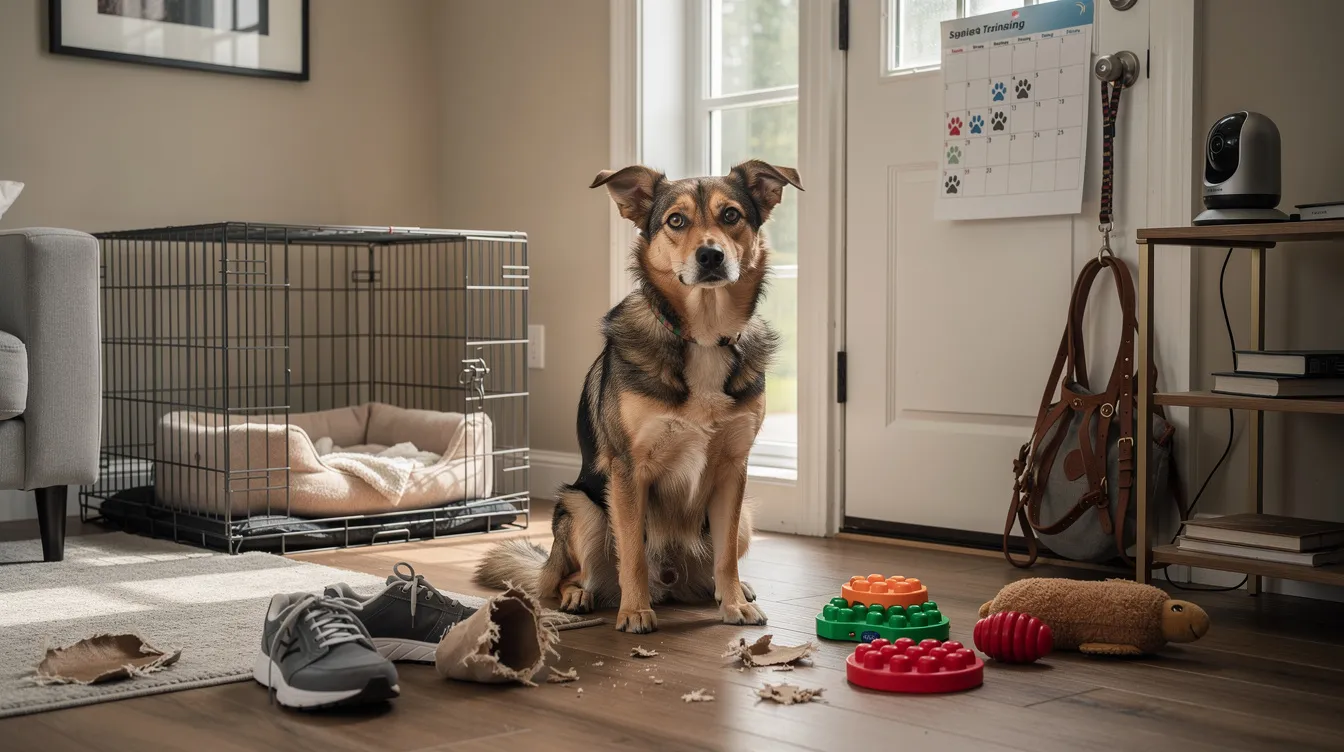
The solution is a clear, written protocol that every person in the household follows. This includes identical departure and arrival routines, consistent use of departure cues (or deliberate randomization of cues), and agreement on whether to respond to anxious behaviors. Regular family check-ins-weekly during the initial phase-keep everyone aligned. If a dog sitter or doggy daycare provider is involved, they need the same written instructions. Training plans developed through professional behavior consultations include guidance for every caretaker in the dog’s life.
Setbacks During Progress
Regression is normal. A dog that tolerated 45-minute absences may suddenly struggle with 20 minutes after a schedule change, a move, or even a thunderstorm that triggered storm phobias. This does not mean the training failed-it means the dog’s problem requires recalibration.
When setbacks occur, return to a duration where the dog was previously successful and rebuild from there. Desensitization gradually increases the duration of separations, and you must reapply that gradual approach after disruptions. Celebrate incremental improvements rather than focusing on the target endpoint. Providing mental stimulation helps reduce anxiety in dogs during these regression periods-puzzle feeders, a stuffed food toy, scent work, and interactive games keep the dog’s attention engaged and reduce overall stress. Routine-building strategies help stabilize progress after life transitions.
Severe Cases Requiring Medication
When a dog’s anxiety is so intense that it cannot learn-when it refuses food, self-injures, or experiences what amounts to a full panic attack every time the owner leaves-behavior modification alone may not be enough. Medication can help dogs tolerate isolation during treatment by lowering the baseline arousal enough for learning to occur.
Two medications have long been FDA-approved for canine separation anxiety when combined with behavior modification: clomipramine, a tricyclic antidepressant used for dog anxiety, and fluoxetine, prescribed for dogs under the brand name Reconcile. Both require several weeks to reach full therapeutic effect. For acute situations, benzodiazepines like alprazolam may be used-one study found that 30 out of 32 dogs showed reduced anxiety with alprazolam treatment.
In a significant development for veterinary medicine, the FDA approved Tessie (tasipimidine oral solution) in May 2026 as the first drug approved to treat both noise aversion and separation anxiety in dogs. It works by modulating sympathetic nervous system pathways-the fight-or-flight response that underlies both conditions. This is particularly relevant for many dogs that experience both storm phobias and separation anxiety simultaneously.
Anti-anxiety medication and anti-anxiety drugs are not standalone solutions. They are most effective when paired with structured behavior modification and professional training. All pharmaceutical intervention requires veterinary advice, including baseline lab work and ongoing monitoring for side effects. Pheromone therapy can reduce anxiety in dogs by 83%, and dog appeasing pheromone products offer a non-pharmaceutical complement that some owners find helpful as part of a comprehensive behavior management plan.
The key message is that even the most severe cases have treatment pathways. Drug therapy combined with professional behavior modification produces measurable results in most dogs.
Conclusion and Next Steps
Separation anxiety is a serious condition, but it is highly treatable with proper professional guidance and consistent implementation. Research demonstrates that systematic desensitization and counter-conditioning produce significant improvement in the majority of dogs-including those with severe histories of trauma, shelter stays, and chronic anxiety. Whether your dog’s behavior falls in the range of mild separation anxiety or represents a more complex case, structured intervention works.
If you suspect your dog has separation anxiety, take these immediate steps:
- Document the behavior: Set up a camera to record your dog’s behavior during absences. Video evidence reveals the precise timing, intensity, and pattern of distress behaviors-information that’s essential for accurate diagnosis and treatment planning.
- Schedule a veterinary consultation: Rule out medical problems including urinary incontinence, gastrointestinal disease, and cognitive dysfunction before attributing symptoms to anxiety.
- Contact a professional trainer for behavior evaluation: A qualified trainer or veterinary behaviorist can distinguish true separation anxiety from confinement distress, boredom, or incomplete house training-and design a protocol matched to your dog’s specific needs.
- Begin preventing separation anxiety in puppies: If you have a young dog, start building independence now through brief, positive separations and structured alone time.
For Winston-Salem and Triad NC dog owners, exploring related topics like general anxiety management, confidence-building exercises, and ongoing maintenance training can further support your dog’s long-term wellbeing.
Additional Resources
- Off Leash K9 Training Winston-Salem offers private behavior consultations and board-and-train programs designed for dogs with separation anxiety and other canine anxiety challenges
- Behavior monitoring tools: Video cameras, behavior tracking apps, and structured logging templates help track progress and identify regression patterns early
- Enrichment products: Puzzle feeders, frozen Kongs, snuffle mats, and interactive toys provide mental stimulation that supports treatment-particularly when used exclusively during departures to build positive associations
- Veterinary behaviorist referrals: For severe cases requiring medication management, ask your veterinarian for a referral to a board-certified veterinary behaviorist in the NC/Triad region who can coordinate drug therapy with your training protocol
