
Introduction
Resource guarding is a defensive behavior in which a dog protects something it values-food, toys, resting spots, or even people-through warning signals or outright aggression. It is one of the most common behavior problems dog owners face, and it is also one of the most misunderstood. Resource guarding is anxiety-based, not aggression-based, meaning the dog feels threatened rather than dominant. This distinction changes everything about how the behavior should be addressed.
This guide covers how to recognize resource guarding in dogs at every stage, what causes it, which training solutions actually work, and when professional help is necessary. It is written for dog owners in the Winston-Salem and Triad, NC area who are dealing with guarding behavior-whether you have a new puppy showing early signs, an adult dog with established patterns, families with children navigating safety concerns, or multi-pet households managing competition between animals.
The direct answer: Resource guarding can be effectively managed and reduced through positive reinforcement training, environmental management, and structured behavior modification techniques such as desensitization and counter-conditioning. Punishment makes guarding worse and should always be avoided.
By the end of this article, you will:
- Recognize subtle signs and overt signs of resource guarding before they escalate
- Understand the psychology behind why dogs develop resource guarding
- Implement immediate safety management and consistent management strategies
- Know which behavior modification techniques and training programs produce good outcomes
- Identify when to seek professional help from a qualified trainer or veterinary behaviorist
Understanding Resource Guarding Behavior
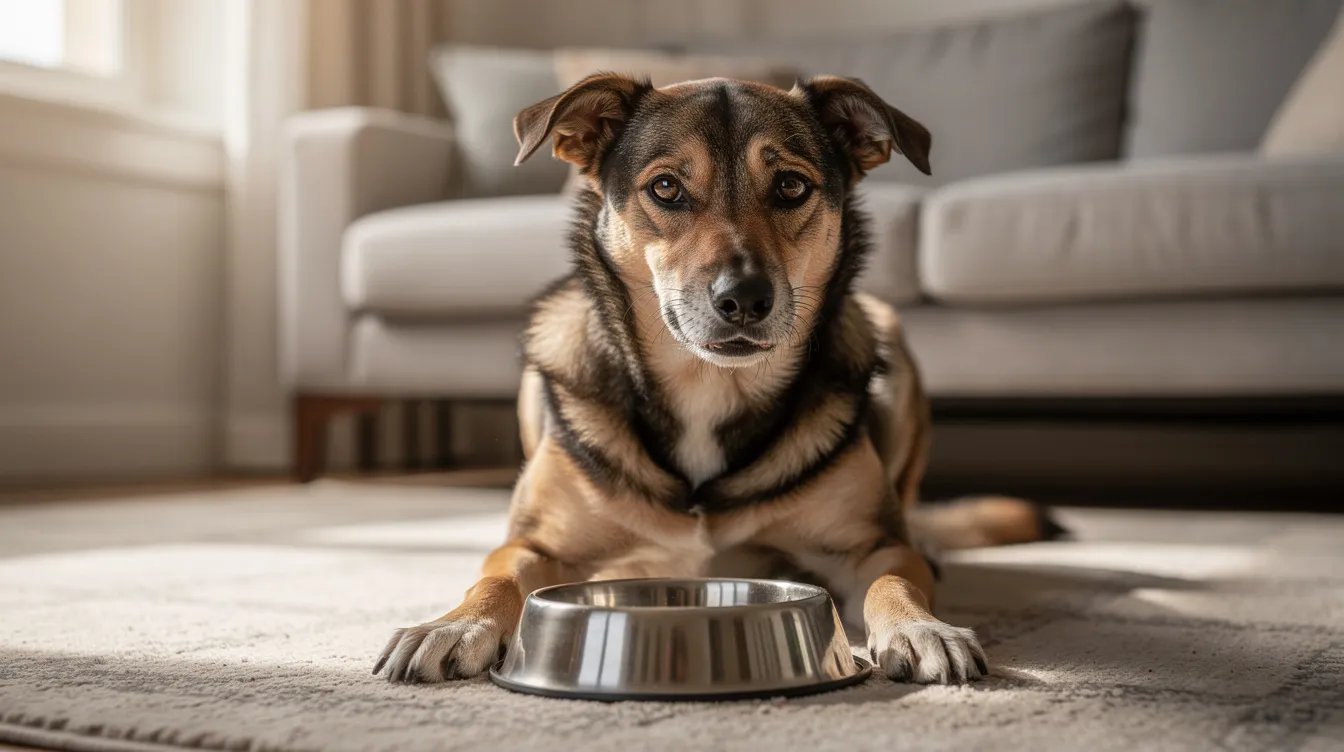
Resource guarding is a defensive behavior in dogs where the animal protects items it values, like food or toys, from perceived threats. It is also known as possessive aggression, though that term can be misleading-guarding is fundamentally rooted in anxiety and fear, not in dominance or offensive aggression. Dogs guard because they believe a valued resource is about to be taken away, not because they are trying to assert rank over humans or other animals.
This distinction matters because it determines the entire approach to treatment. Historically, trainers mislabeled guarding as “alpha” behavior and applied punishment-based corrections. Modern behavior science has firmly rejected that framework. Punishing a guarding dog suppresses warning signals like low growling without changing the underlying emotional state, which makes the behavior potentially dangerous-the dog simply stops warning before it bites.
The Psychology Behind Guarding
Resource guarding is instinctive and learned behavior. The fear-based response system activates when a dog perceives a threat to something it values. This is a defensive reaction-the dog is trying to protect what it has, not launch an attack. The difference between guarding (defensive) and true aggression (offensive behavior) is critical for selecting the right treatment plan.
Common triggers for resource guarding include perceived threats or previous experiences of losing resources. A dog that had food taken away roughly, competed with littermates for meals, or experienced scarcity in a shelter or feral environment develops an association: humans approaching means loss. Dogs learn guarding behaviors through reinforcement history-if a growl causes a person to back off, the dog learns that warning behaviors work. Over time, what begins as subtle signs escalates into aggressive behaviors if the underlying anxiety is never addressed.
Resource guarding can develop in adult dogs due to anxiety, not just in puppies with difficult early histories. Dogs may guard due to early life experiences with food scarcity, but environmental conditions can also amplify resource guarding behavior at any life stage. Changes in household composition, irregular feeding schedules, pain from an underlying medical issue, or the arrival of a new puppy can all lower the threshold for guarding.
A large cross-sectional survey of 3,589 dogs found that impulsivity and fearfulness strongly correlated with the presence and severity of resource guarding patterns. Neutered males and mixed breeds had a statistically higher incidence of aggressive guarding. Notably, teaching a reliable “drop” command and providing palatable food during meals were associated with reduced aggression-evidence that early training and proper management directly lower risk.
Types of Resources Dogs Guard
Food and food-related items are the most commonly guarded resources. This includes the food bowl, bones, high-value chews, treats, and anything the dog is eating. Some dogs guard food items they haven’t even started consuming yet. Rapid ingestion-where the dog eats as fast as possible when someone approaches-is a guarding pattern that owners often overlook. In a shelter study of over 1,000 dogs, 14.4% of dogs available for adoption were classified as resource guarders, with 30.8% guarding during a food bowl test and 83.6% guarding during a possession test.
Toys, beds, favorite sleeping spots, and high-value items are also frequently guarded. Some dogs guard objects that humans consider trivial-a sock, a piece of cardboard. What matters is what the dog values, not what the owner considers valuable. More generalized guarding, where a dog protects many types of items, tends to be harder to treat than guarding limited to one category.
People, attention, and social resources represent an often-overlooked form of guarding. A dog may guard a specific family member by positioning itself between that person and other pets or humans, growling when others approach, or interrupting affection directed at someone else. This pattern can be especially disruptive when guests visit.
Territory and space include guarding doorways, cars, crates, beds, hallways, and outdoor areas. A dog that growls when approached on its bed or blocks a hallway is exhibiting spatial guarding, which can overlap with territorial aggression. Understanding which category of resource your dog guards helps shape the right training approach.
Recognizing Signs and Escalation Levels
Early recognition of guarding behavior is the single most important factor in successful intervention. The earlier you identify and address the signs, the lower the risk of escalation and the faster the dog responds to training. Resource guarding can escalate if handled improperly, so learning to read your dog’s body language accurately is essential.
Early Warning Signs
Warning signs of resource guarding include stiffening, growling, and snapping-but many earlier signals appear well before those obvious reactions. Dogs may stiffen their body over an item, freeze in place, or show what trainers call “whale eye”-showing the whites of their eyes while turning their head slightly away. A hard stare directed at an approaching person is a sign of resource guarding. Lifting their lips can signal resource guarding, as can pinning ears back or sideways.
Behavioral changes are equally important. Watch for a dog that eats faster when you walk nearby, hovers protectively over a guarded item, carries resources to isolated areas, or blocks access to objects with its body. These subtle signs of stress-lip licking, yawning, turning away-often precede the more recognizable warnings. Understanding what distance triggers your dog’s reaction is critical for designing effective training: some dogs only guard when you’re within arm’s reach, while others react to anyone entering the room.
Progressive Escalation Patterns
Resource guarding follows a predictable escalation ladder. Low-level warnings include low growling, curled lips, hard stares, and freezing. If these signals are ignored or punished, the dog escalates to moderate behaviors: snapping in the air, lunging, and air biting. High-level aggression involves contact biting, chasing a person away, or sustained aggressive behaviors that are genuinely dangerous.
Baring teeth is a clear indication of resource guarding and represents a significant escalation beyond the earliest body language cues. The critical point here: never punish growling or other warning signals. Avoiding punishment is critical in addressing resource guarding behaviors because suppressing warnings doesn’t eliminate the underlying fear-it simply removes the dog’s communication system, making sudden bites more likely.
If a dog has displayed snapping or biting, seek help from a positive-reinforcement trainer or a certified behavior professional immediately. These are not behaviors that resolve on their own.
Context-Specific Guarding Scenarios
Guarding around children and family members carries elevated risk. Children move unpredictably, don’t read dog body language, and may approach a dog while it eats or plays with a prized toy. Any family member who cannot reliably recognize warning signs should not interact with the dog during resource-related moments until proper training protocols are established.
Multi-dog household dynamics add complexity. Dogs may guard food, toys, resting spots, or human attention against other dogs. The presence of other pets creates competition that can increase guarding intensity. Feral dogs and wild animals in nature guard resources constantly-domestic dogs in multi-pet homes are simply expressing that same instinct in a confined environment. Small wins reinforce the behavior: if growling at another dog secures the toy, the pattern strengthens.
Situational triggers include environmental stress, household changes, pain, and inconsistency. A new baby, a move, irregular feeding schedules, or even something as simple as a loud storm during mealtime can lower the threshold for guarding. Environmental conditions can amplify resource guarding behavior, making it appear suddenly in dogs that previously showed no signs.
Professional Training and Management Strategies
Addressing resource guarding effectively requires a comprehensive approach combining immediate safety measures, structured behavior modification, and proper management of the dog’s environment. The goal is not to suppress warning behaviors but to change how the dog feels about people approaching its resources.
Immediate Safety Management
Environmental management can reduce opportunities for resource guarding behavior to occur. Before any training begins, the priority is preventing situations where guarding can be practiced and strengthened.
Environmental setup: Remove access to high-value items during training periods. Use baby gates to create separate zones. Feed the dog in a quiet, isolated area where no one will approach while the dog eats. If you have multiple dogs, feed them in separate rooms. Provide each dog with its own resources to prevent competition.
Supervised feeding protocols: No one should approach the food bowl while the dog is eating until training has progressed to a safe level. Management strategies for resource guarding include preventing competition and not forcibly taking items away. Avoid taking items away forcefully to prevent guarding-this is one of the most common mistakes owners make, and it directly makes guarding worse.
Family education: Every family member must follow the same protocols. Inconsistency from even one person can undermine weeks of progress. Teach everyone in the household to recognize the dog’s reaction to approaches, to never corner the dog with a resource, and to have an exit strategy if the dog escalates. Consistent management across all handlers is essential for good outcomes.
Emergency protocols: If the dog freezes or stiffens, step back slowly. Never reach toward a guarding dog. Have a recall command or use a high-value treat tossed away from the resource to redirect the dog rather than confronting it directly.
Behavior Modification Techniques
Reward-based training techniques should be used to modify resource guarding behavior. The two foundational methods are desensitization and counter-conditioning, which work together to change the dog’s emotional response.
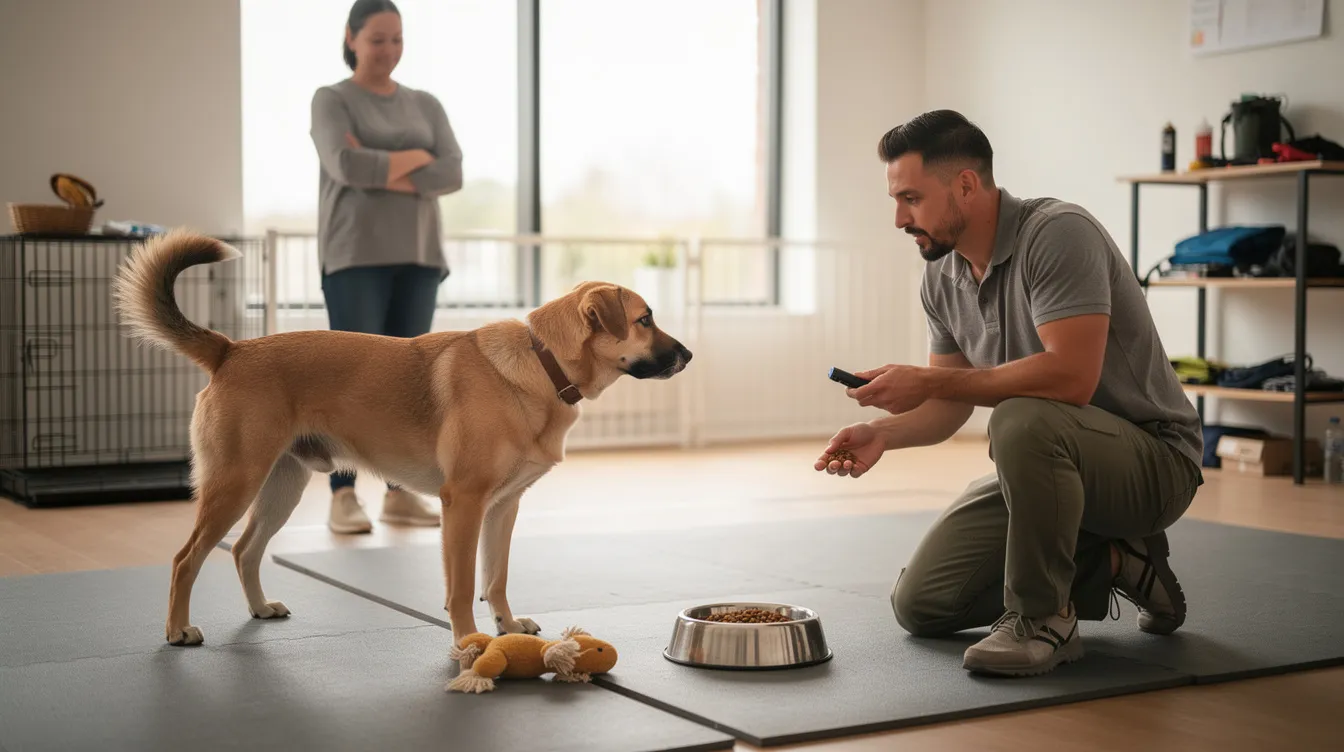
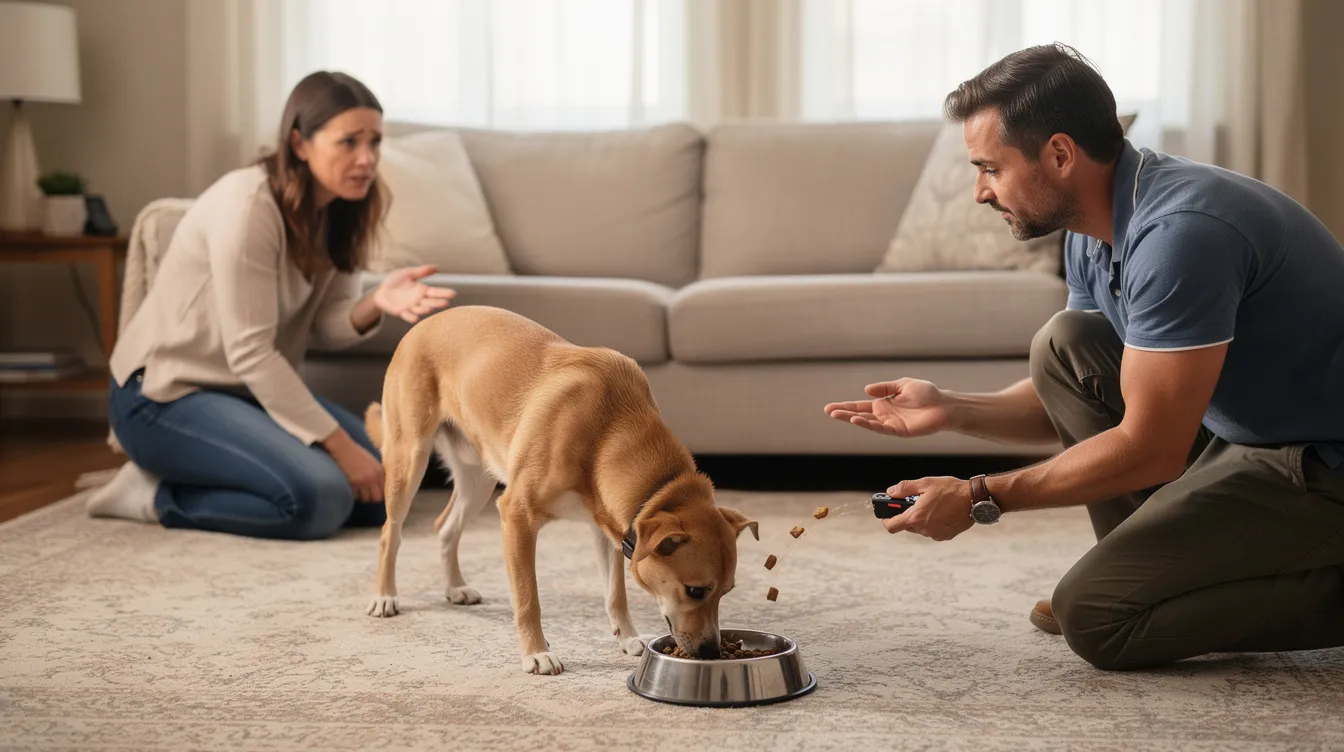
Counter-conditioning changes the dog’s emotional association with a triggering event. When an approaching person consistently predicts something wonderful-like hot dogs, cheese, or another special treat-the dog begins to welcome approaches rather than fear them. Desensitize dogs by tossing treats near guarded items rather than reaching toward them. Over time, the dog learns that humans approaching during eating means bonus food, not loss.
Desensitization involves gradually decreasing the distance while approaching a guarding dog. Effective management of resource guarding requires positive associations through desensitization. Start at a distance where the dog notices you but shows no tension. Toss a high-value treat toward the bowl, then walk away. Gradually close the distance over days and weeks. If the dog stiffens at any point, you’ve moved too fast-return to the previous comfortable distance. This approach must be systematic and patient.
For food guarding specifically, a common protocol involves: standing far away and tossing treats into the bowl while the dog eats, then gradually hand feeding at closer distances, then touching the bowl while offering something better, and eventually picking up the bowl briefly before immediately returning it with an added reward. Each step may take days or weeks depending on severity.
Trade-and-reward systems teach the dog that giving something up results in getting something even better. Teaching a voluntary “trade” can help reduce resource guarding. Use trade games to encourage item surrender-offer a treat more valuable than the guarded item in exchange. This builds trust because the dog learns it won’t permanently lose what it has.
Teach a strong “drop it” cue during play using heavy reinforcement. Start with low-value objects the dog doesn’t guard, reward generously for releasing, and only gradually work toward higher-value items. Teach the “drop it” cue with heavy reinforcement, and practice it frequently in non-guarding contexts so the behavior becomes automatic. Research confirms that teaching a reliable drop command is associated with reduced aggressive guarding patterns.
Puppies need positive interactions around food and toys from the earliest age. Start training early to prevent resource guarding-handling food bowls gently, adding treats during meals, and practicing trades regularly builds good habits that prevent guarding from developing in the first place. Puppy training programs that incorporate these exercises set puppies up for lifelong success.
Training Program Comparison
| Factor | Private Lessons | Behavior Consultation | Board-and-Train |
|---|---|---|---|
| Best For | Mild to moderate cases | Severe or complex cases | Moderate to severe cases |
| Setting | Owner’s home or facility | Home visit or virtual | Training facility |
| Timeline | Weeks to months | Ongoing with check-ins | 2-4 weeks intensive |
| Owner Involvement | High-owner practices daily | High-owner implements plan | Lower during program, critical after |
| Consistency | Depends on owner | Depends on owner | Controlled by trainer |
| Cost Range | $75-150 per session | Higher per consultation | Mid-hundreds to thousands |
| Generalization | Strong in home environment | Varies | Requires owner follow-through |
For many dogs, private dog training provides enough structure to address mild resource guarding issues, particularly when owners are committed to daily practice. The owner learns directly from a dog trainer, and the training naturally occurs in the home environment where guarding happens.
For moderate to severe cases, a board-and-train program often produces the fastest results because the trainer controls every variable-feeding schedules, exposure levels, reinforcement timing, and environmental triggers. The immersive format is particularly effective for aggression cases where the dog needs intensive daily work that busy owners struggle to provide consistently. However, success depends heavily on owner education after the dog returns home. Without follow-up training, regression is common.
Behavior consultations with certified professionals (CAAB, Dip-ACVB, or CPDT-KA with aggression specialization) are recommended for severe cases, dogs with coexisting anxiety, or situations involving biting history. These consultations provide the deepest assessment and most tailored treatment plan.
The right choice depends on severity level, household factors (presence of children, other pets), and owner capacity for daily training work. Many dogs benefit from a combination-a board-and-train program followed by private lessons to maintain and generalize the results.
Common Challenges and Solutions
Even with a solid training plan, setbacks are normal. Resource guarding is a deeply ingrained behavior, and progress is rarely linear. Understanding common obstacles helps you adjust rather than give up.
Training Plateau or Regression
After initial improvement, many dogs hit a plateau or regress-often triggered by a change in routine, a new visitor, illness, or a family member inconsistently applying protocols. When progress stalls, reassess the dog’s threshold distance. Return to an earlier, successful stage of training rather than pushing forward. Ensure every person in the household follows the same rules-one family member who casually reaches for the food bowl can undo weeks of careful desensitization.
Generalization is another challenge: a dog may stop guarding the food bowl around one person but continue with others. Training must be practiced with different people, in different rooms, and with different food items to build broad reliability. Maintaining consistency across family members and preventing inadvertent reinforcement are the keys to breaking through plateaus.
Multi-Pet Household Complications
When multiple dogs compete for resources, guarding dynamics become more complex. Feed dogs in separate rooms with doors closed. Distribute toys and chews so each dog has its own, and supervise any shared play. Be aware that one dog’s guarding behavior can teach other dogs to guard-younger or more submissive dogs may suppress their own warning signs until they escalate suddenly.
Behavior modification must address the interactions between dogs specifically. Controlled introductions to shared resources, with careful monitoring of each dog’s reaction, should only happen after individual training has progressed significantly. If guarding between other dogs in the home involves aggressive behaviors, professional guidance is essential.
Child Safety Concerns
Children must be taught never to approach a dog while it eats or chews, and never to take toys or food items from a dog’s mouth. These rules are non-negotiable. Create physical safe zones-a crate, a gated room, a specific bed-where the dog can enjoy resources without any child interaction. Adults should handle all training exercises; children should not practice trades or approach protocols until the dog trainer confirms it is safe and the child is old enough to follow instructions reliably.
Understanding why puppies bite and how guarding develops helps parents set appropriate boundaries from the start. With a new puppy in a household with children, establishing clear rules about resource interactions from day one prevents guarding patterns from forming.
Severe Guarding Cases
When a dog consistently escalates to biting, guards many types of resources across contexts, or shows no improvement after weeks of owner-led intervention, professional intervention is necessary. Severe cases often benefit from a structured board-and-train program where the dog receives daily intensive work in a controlled environment.
Medical evaluation should always accompany severe guarding. An underlying medical issue-dental pain, arthritis, gastrointestinal discomfort-can make a dog feel more vulnerable and lower its threshold for defensive behavior. A veterinary behaviorist can determine whether medication (such as anxiolytics) would help reduce baseline anxiety enough to make training more effective. In some severe cases, complete elimination of all guarding may not be realistic; the goal shifts to consistent management that keeps everyone safe while maintaining the best possible quality of life for the dog.
Conclusion and Next Steps
Resource guarding is a treatable behavior rooted in anxiety, not malice. With the right combination of positive reinforcement, environmental management, and structured behavior modification, many dogs show significant improvement. The key principles are consistent: avoid punishment, build positive associations, teach voluntary resource sharing through trades and “drop it” cues, and manage the environment to prevent rehearsal of guarding behaviors.
Immediate action steps:
- Assess safety: Identify which resources your dog guards, at what distance guarding behavior begins, and who in the household is most at risk
- Implement management: Use baby gates, separate feeding areas, and remove high value items that trigger guarding until training progresses
- Start basic exercises: Begin tossing high value treats near the dog during meals from a safe distance to build positive associations
- Schedule a professional consultation: If your dog has snapped, bitten, or if children or other pets are at risk, contact a qualified trainer experienced in aggression cases before attempting advanced exercises
- Be patient and consistent: Mild cases may improve noticeably within weeks of daily training. Moderate cases typically require several months. Severe cases need months of professional work and may require ongoing management indefinitely.
Resource guarding rarely exists in isolation. Dogs that guard often benefit from broader obedience training that builds impulse control, strengthens communication between dog and owner, and reduces overall anxiety. Addressing the whole dog-not just the guarding behavior-produces the most durable, lasting results.
