
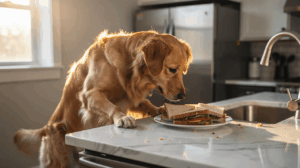
Dogs counter surf because they are opportunistic scavengers acting on instinct, sensory triggers, and past success. Counter surfing is when a dog places its front paws on kitchen counters, tables, or other elevated surfaces to reach food or objects. Most dogs who do this have learned that counters are easy sources of food, and the behavior persists because it is self-rewarding.
This article covers the biological and psychological reasons behind dog counter surfing, the specific triggers and risk factors that increase it, common misconceptions that lead to ineffective responses, and when professional training help is warranted. If you are a dog owner dealing with a pup who regularly raids your kitchen counter, understanding the root causes will help you choose the right prevention strategy.
Direct answer: Dogs counter surf primarily because their natural scavenging instincts drive them to find food wherever it is available, and even a single success on a counter can reinforce the behavior and encourage them to try again.
Here is what you will learn:
- Why counter surfing is rooted in food-seeking behavior, not defiance
- How food smells, visual cues, and intermittent reinforcement keep the habit alive
- Which environmental and dog-specific factors raise the risk
- Why punishment-based approaches can backfire and what works better
- When to seek professional training to stop counter surfing
Understanding Counter Surfing as Natural Dog Behavior
Counter surfing refers to dogs jumping up or placing paws on counters, tables, or elevated surfaces to access food or objects. Curiosity drives dogs to explore kitchen counters, and the behavior is a normal extension of canine foraging tendencies rather than necessarily a sign of defiance.
Evolutionary Background and Scavenging Instincts
Domestic dogs share ancestry with ancient wolf populations and retain strong foraging and scavenging tendencies. Opportunistically investigating available food sources is normal canine behavior, and domestic dogs can quickly learn that kitchen counters, tables, and other surfaces sometimes provide access to food. Once that search produces a reward, the behavior can become more likely to happen again.
The Role of Opportunistic Feeding
Dogs are naturally opportunistic feeders who explore potential food sources in their environment. Research on free-ranging dogs shows that they adjust their foraging behavior according to the quality and availability of food resources. Inside the home, a countertop can become another place worth checking when a dog has learned that food may be available there.
A dog’s sense of smell can trigger counter surfing even when no food is visible. With up to roughly 300 million olfactory receptors, compared with about 6 million in humans, dogs can detect food odors that people may overlook. This sensory advantage means leftover food smells can continue to attract a dog after meal preparation ends.
Understanding this biological foundation explains why the behavior can become so persistent. The next section breaks down the specific mechanisms that turn a natural food-seeking tendency into a kitchen problem.
Primary Reasons Dogs Counter Surf
Natural scavenging instincts meet modern kitchens stocked with tempting food, and the result can be a counter surfer. Three factors commonly work together to create and maintain the behavior: sensory triggers, reinforcement patterns, and physical opportunity.
Food Smells and Sensory Triggers
Dogs process much of their world through scent. Food smells from cooking, cooling meals, or recently used surfaces can pull a dog toward the counter. Cleaning counters thoroughly and removing accessible food can reduce the cues that encourage investigation.
Visual triggers can compound the effect. Food packaging, crumbs on the counter, or an open container can all become learned signals. A dog that has previously found food near a bread bag may investigate similar packaging again. Even empty wrappers that once held food can trigger investigation when appealing scents remain.
Intermittent Reinforcement and Self-Rewarding Behavior
Counter surfing is often self-rewarding for dogs. When a dog jumps up and finds a piece of chicken, the food itself delivers the reward with no human involvement needed.
Unpredictable rewards can make counter surfing especially persistent. A dog that finds food only occasionally may continue checking because another attempt could pay off. This is why consistent counter management matters: every successful raid can reinforce the behavior again. Keeping food inaccessible while teaching an alternative behavior gives the dog fewer opportunities to practice the unwanted habit.
Physical Capability and Accessibility
Tall or athletic dogs can reach counters more easily, but dogs of many sizes can learn counter surfing when opportunity and motivation are present. Medium and large dogs may be able to reach a standard kitchen counter by standing on their hind legs, while smaller dogs may jump or use nearby furniture or lower surfaces to gain access.
Research comparing Labrador Retrievers and German Shepherd Dogs in food-motivated tasks found that Labradors reached significantly higher progressive-ratio breakpoints in an experimental food-reward task. This suggests that breed can influence some aspects of food-related motivation, but it does not mean every Labrador will counter surf or that breed alone predicts how persistent an individual dog will be at home.
Kitchen layout matters too. Accessible stools, open floor plans, low tables, and other nearby surfaces can increase a dog’s ability to reach food.

Contributing Factors That Increase Counter Surfing
Beyond the core drivers, specific environmental conditions and individual dog characteristics can raise or lower the probability of counter surfing.
Environmental and Situational Triggers
Counter surfing often occurs during cooking and eating times, when food on the counter is most abundant, and supervision is divided between meal preparation and dog management.
Boredom or understimulation can also contribute. A dog left with little appropriate activity may explore its surroundings, and counters containing food or interesting smells can become attractive. Adequate exercise, mental enrichment, food puzzles, and appropriate chew items can provide better outlets for exploration and foraging behavior.
Stress and routine changes may affect behavior as well. Some dogs become more restless or food-seeking when their surroundings or routines change. If counter surfing appears suddenly alongside a noticeable increase in appetite or other behavioral or physical changes, a veterinarian can help rule out an underlying medical cause.
Dog-Specific Risk Factors
Age can shape the behavior differently at each life stage. Puppies explore their environment extensively, including counter edges and tables. Adolescent dogs often have the size and mobility to reach surfaces that were inaccessible when they were younger.
Breed tendencies can also play a role. A Texas A&M study found that popular sporting-group breeds, including retrievers, spaniels, and setters, were approximately 10% more likely to show higher food motivation than other dogs. Higher food motivation can make accessible food especially difficult to ignore.
Individual differences matter as well. Dogs with high curiosity, strong food motivation, weak impulse control, or a training history that never addressed cues such as “leave it” or “place” may be more likely to investigate accessible food. Medical conditions can also affect appetite, so a sudden increase in hunger or scavenging behavior warrants a conversation with your veterinarian.
Risk Assessment Comparison
| Factor | High Risk | Low Risk |
| Supervision | Unsupervised kitchen access during cooking | Dog supervised or separated during food prep |
| Counter Management | Food left accessible, crumbs remaining | Counters clear, food stored, surfaces cleaned |
| Dog’s State | Bored, hungry, understimulated | Well-exercised, fed on schedule, mentally engaged |
| Training Level | Limited impulse control or alternative behaviors | Solid obedience foundation with reliable commands |
Use this table to assess your own situation. If you land in the “High Risk” column on multiple factors, environmental management is the first step before expecting training to hold up consistently.

Common Misconceptions About Why Dogs Counter Surf
Misunderstanding the motivation behind counter surfing can lead to responses that do not address the reason the behavior keeps happening.
“My Dog Is Being Spiteful or Stubborn”
Counter surfing is better explained by reinforcement, opportunity, and food motivation than by spite or stubbornness. When your dog returns to the counter after being told “no,” the scent of food and a history of finding rewards there may be stronger influences than the earlier correction. Focusing on management and training is more useful than treating the behavior as a moral choice.
“Punishment Will Teach Them It’s Wrong”
Punishment alone does not address the reward that makes counter surfing worthwhile. Yelling, startling, or correcting a dog after it approaches the counter may suppress the behavior temporarily, but some dogs simply learn to wait until no one is watching. Punishment can also increase anxiety or create sneaky behavior. Preventing access to food and consistently teaching an alternative behavior are more reliable strategies.
“Some Dogs Are Just Bad or Untrainable”
Research shows that food motivation varies substantially among breeds and individual dogs. Highly food-motivated dogs may require stricter management around accessible food, but breed alone does not explain every dog’s behavior. Counter surfing is also shaped by opportunity and reinforcement, which means consistent management can reduce the chances that the behavior continues to pay off.
“They Should Know Better by Now”
Habit formation does not work on a moral timeline. As long as opportunities and intermittent reinforcement continue, the behavior can persist. A dog that has practiced counter surfing for a long time may need more consistent management and training than a dog that has only recently started. Improvement timelines vary depending on the dog’s history, motivation, environment, and how consistently the household prevents reinforcement.
Conclusion and Next Steps
Counter surfing is natural food-seeking behavior driven by instinct, opportunity, and reinforcement rather than simply defiance. Your dog is using its nose, memory, and experience to locate food in the most efficient way available. Understanding this makes prevention and training more practical.
Start with these steps:
- Remove food from counters and keep countertops clear whenever you are not actively using them. Environmental management helps prevent counter surfing from paying off.
- Use baby gates to limit kitchen access when your dog cannot be supervised during cooking or eating times.
- Teach your dog the “leave it” cue and reward the dog for disengaging from tempting food or objects.
- Train a “place” command so your dog has a specific location, such as a dog bed or mat, to settle while you cook.
- Reward calm behavior near counters. Reinforcing four paws on the floor helps build the behavior you want.
- Provide enrichment. Food puzzles, appropriate chew items, exercise, and other activities can reduce boredom and give your dog acceptable ways to forage and explore.
Consider professional guidance if counter surfing persists despite consistent management, if it is part of broader obedience problems, or if food guarding or aggression creates a safety concern. If the behavior appears suddenly alongside increased hunger or other health changes, contact your veterinarian first.
For Winston-Salem owners, Off Leash K9 Training Winston-Salem provides dog obedience training for common issues such as jumping, poor recall, and lack of focus around distractions. Owners can review available training options and program details or contact the Winston-Salem training team to discuss which option may fit their dog.
Frequently Asked Questions
Why do dogs find counter surfing so highly rewarding?
Dogs find counter surfing rewarding because the behavior may result in access to desirable food. Even occasional success can reinforce the behavior and encourage the dog to check the counter again.
What is the best way to teach a dog not to counter surf?
A practical approach combines environmental management with training. Keep food inaccessible, teach cues such as “leave it” and “place,” prevent unsupervised access when necessary, and consistently reward appropriate behavior around the kitchen.
How can I manage my dog’s access to the kitchen to prevent counter surfing?
Baby gates can limit kitchen access when you cannot supervise your dog. A crate may also be appropriate for dogs that are already comfortable and properly crate-trained. Keep counters clear of food and clean surfaces after meal preparation to reduce temptation.
Is it okay to punish a dog for counter surfing?
Punishment is generally not the most useful first strategy because it does not remove the food reward or teach the dog what to do instead. Consistent management and reinforcement of an alternative behavior are more effective ways to build better kitchen habits.
Can boredom cause my dog to counter surf?
Boredom or understimulation can contribute to counter surfing in some dogs. Providing appropriate exercise, food puzzles, chew items, and other enrichment can give your dog acceptable outlets while you also prevent access to food on counters.
When should I consider professional training for counter surfing?
Consider professional training if counter surfing continues despite consistent management or is part of broader obedience problems. Food guarding or aggression may require individualized professional guidance. If your dog suddenly becomes much more interested in food or scavenging, contact your veterinarian to rule out a medical cause.
